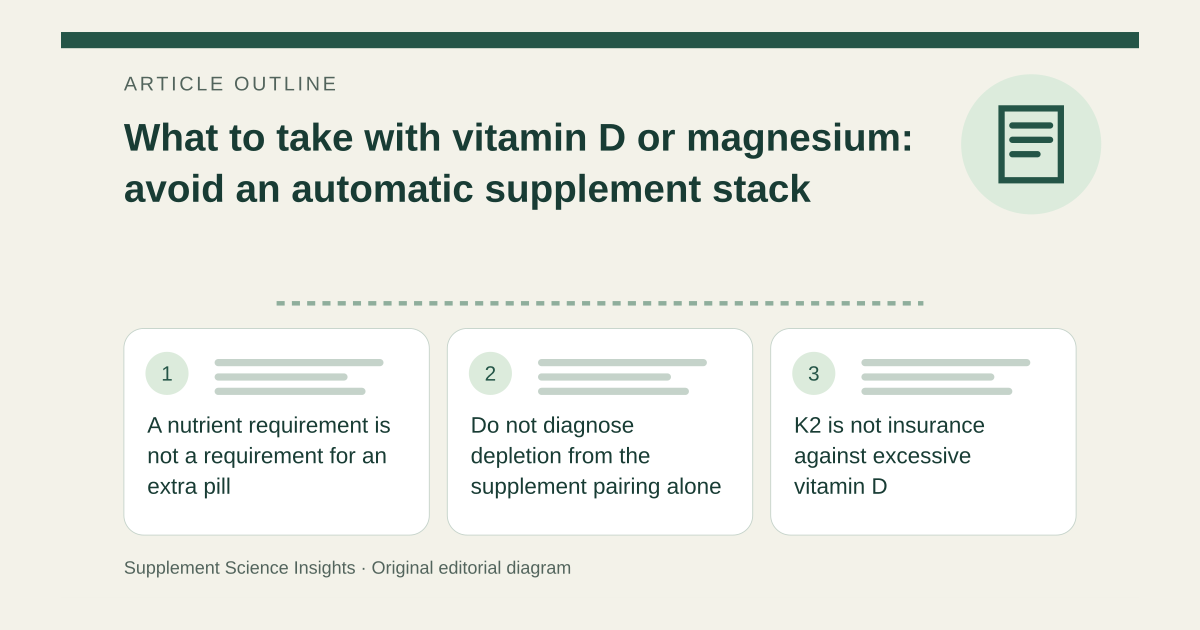
A nutrient requirement is not a requirement for an extra pill
Vitamin D, magnesium and calcium are needed for normal physiology, and food contributes to intake. Having no magnesium supplement is not the same as having no magnesium in the body. The cited intake guidance does not require an extra magnesium pill for every vitamin D user or define one universally necessary partner vitamin. [1][2][3]
Do not diagnose depletion from the supplement pairing alone
Starting D3 does not by itself establish that magnesium has become deficient. Review diet, symptoms, medicines and clinical circumstances if there is a concern. A proposed physiological relationship is not a personal diagnosis or a reason to add progressively larger magnesium amounts. [1][2]
K2 is not insurance against excessive vitamin D
Vitamin K participates in activation of proteins involved in clotting and bone biology. That does not establish that K2 prevents toxicity from excessive D or calcium. Warfarin users need a coordinated vitamin K plan; adding a K2 product without review can be consequential. [4][1][3]
B6 is not an obligatory magnesium companion
Magnesium and B6 have distinct roles and intake guidance. A combination label does not prove that everyone needs both. Excess supplemental B6 can cause sensory neuropathy, so include amounts from multivitamins and other blends before adding another product. [2][5]
What to avoid is an unreviewed overlap
There is no universal vitamin blacklist that fits every D3 user. Avoid exceeding a prescribed plan or stacking high-dose blends without checking the total. Identify each nutrient and amount, account for medicines, and follow a clinician’s individualized advice for deficiency or bone disease. [6][1][4]
Use the actual gap to decide
Imagine a multivitamin already supplies D and B6 while meals supply adequate calcium and magnesium. Adding a multi-nutrient companion can duplicate exposure without addressing a demonstrated need. Compare the full diet and regimen before treating a printed ratio as a personal requirement. [6][2][3]
| Question | Reason |
|---|---|
| What need is documented? | Clarify the purpose |
| What does food already supply? | Avoid assuming all intake comes from pills |
| Any duplicated doses or medicines? | Identify preventable risk |
Sources for this article
- Vitamin D - Health Professional Fact Sheet
Source consulted: 2026-09-21. This is a reference resource, not a claim that we conducted the studies or tested a product. - Magnesium - Health Professional Fact Sheet
Source consulted: 2026-09-21. This is a reference resource, not a claim that we conducted the studies or tested a product. - Calcium - Health Professional Fact Sheet
Source consulted: 2026-09-21. This is a reference resource, not a claim that we conducted the studies or tested a product. - Vitamin K - Health Professional Fact Sheet
Source consulted: 2026-09-21. This is a reference resource, not a claim that we conducted the studies or tested a product. - Vitamin B6 - Health Professional Fact Sheet
Source consulted: 2026-09-21. This is a reference resource, not a claim that we conducted the studies or tested a product. - Dietary Supplements: What You Need to Know
Source consulted: 2026-09-21. This is a reference resource, not a claim that we conducted the studies or tested a product.