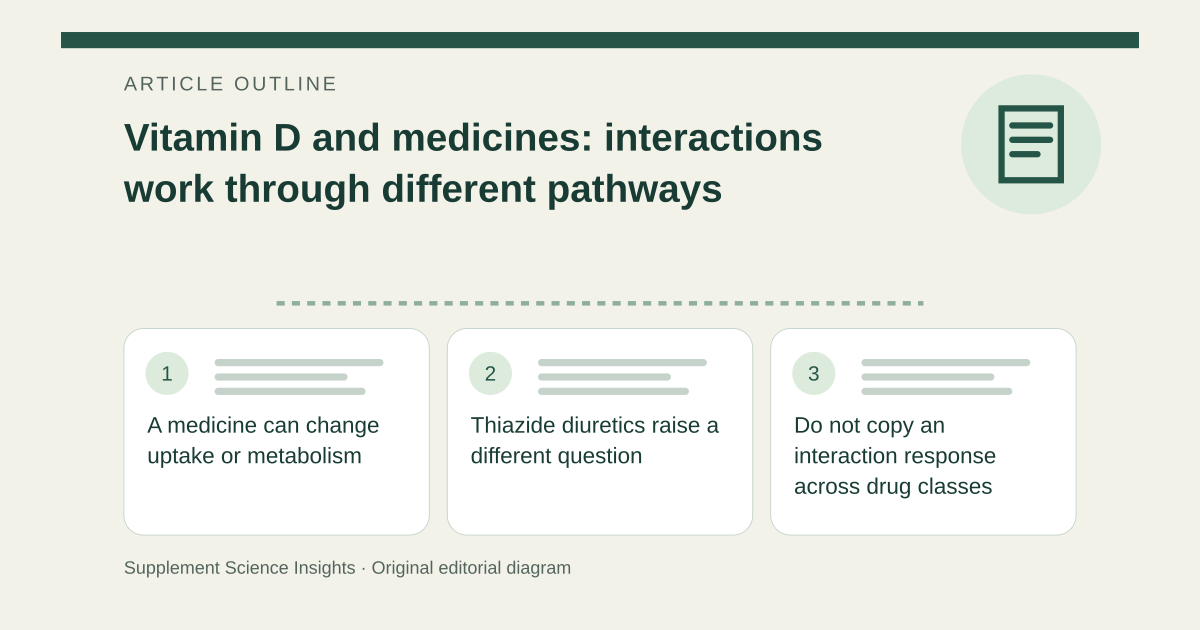
A medicine can change uptake or metabolism
Orlistat can reduce vitamin D absorption from food and supplements. Corticosteroids such as prednisone can reduce calcium absorption and impair vitamin D metabolism. These effects are reasons to review intake and status, not automatic instructions to stop the prescription. [1]
The ODS summary also discusses possible interactions with certain statins, including effects involving shared metabolism at high vitamin D intakes. The wording is cautious; it does not establish that every statin user needs extra vitamin D or must avoid it. [1]
Thiazide diuretics raise a different question
Thiazides reduce urinary calcium loss, while vitamin D increases intestinal calcium absorption. The combination can contribute to high blood calcium, particularly in older people or those with reduced kidney function or hyperparathyroidism. [1]
A blood-pressure medicine category is therefore too broad for a compatibility answer. Bring the named drug, vitamin D amount, calcium products and relevant kidney or endocrine history to the prescriber or pharmacist. This source does not support one spacing interval that resolves all these mechanisms. [1]
Do not copy an interaction response across drug classes
Imagine one person needs review because orlistat may reduce absorption and another because a thiazide may increase calcium-related risk. The same instruction to take more vitamin D would not follow from both situations. Identify the mechanism before discussing a change.
| Detail | Interpretation |
|---|---|
| Orlistat | Potentially reduced vitamin D absorption |
| Thiazide | Potential calcium retention concern |
| Same supplement adjustment | Not established |
Sources for this article
- NIH ODS: Vitamin D
Source consulted: 2026-09-17. This is a reference resource, not a claim that we conducted the studies or tested a product.