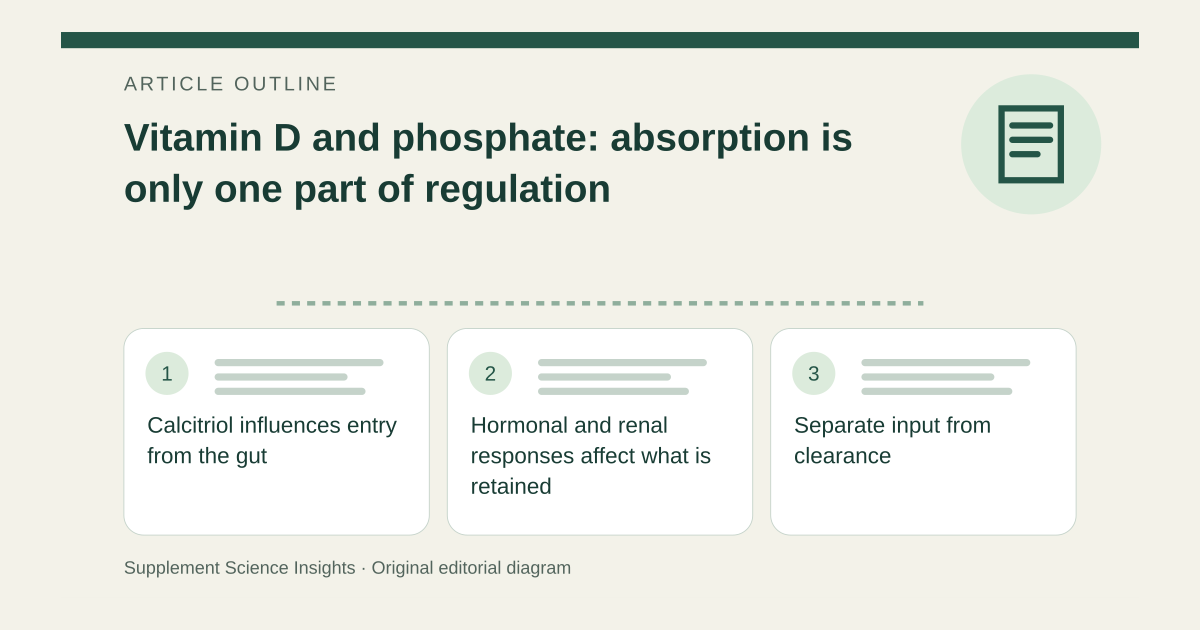
Calcitriol influences entry from the gut
The active vitamin D form, calcitriol, increases intestinal absorption of phosphorus as well as calcium. This supplies minerals used in bone and other body functions. [1][2]
Greater absorption describes one movement of phosphorus; it does not specify the final blood concentration. Intake, movement into tissues and urinary excretion also affect the balance. [1][2]
Hormonal and renal responses affect what is retained
NIH ODS describes coordinated regulation involving the intestines, kidneys and bone. Parathyroid hormone and fibroblast growth factor 23 are involved in reducing renal phosphate reabsorption; impaired kidney function can limit effective phosphate excretion. [2]
A high or low blood phosphate result is consequently not a simple measure of how much vitamin D someone takes. ODS also cautions that serum phosphate does not necessarily reflect whole-body phosphorus content. Interpretation needs the broader clinical context. [2]
Separate input from clearance
Imagine two people absorb similar amounts of phosphorus, but one has substantially impaired kidney clearance. Equal intake does not guarantee equal phosphate blood results.
| Detail | Interpretation |
|---|---|
| Intestinal absorption | One source of entry |
| Kidney excretion | A major route of loss |
| Blood phosphate | Not total body content |
Sources for this article
- RAYALDEE
Source consulted: 2026-09-19. This is a reference resource, not a claim that we conducted the studies or tested a product. - Phosphorus - Health Professional Fact Sheet
Source consulted: 2026-09-19. This is a reference resource, not a claim that we conducted the studies or tested a product.