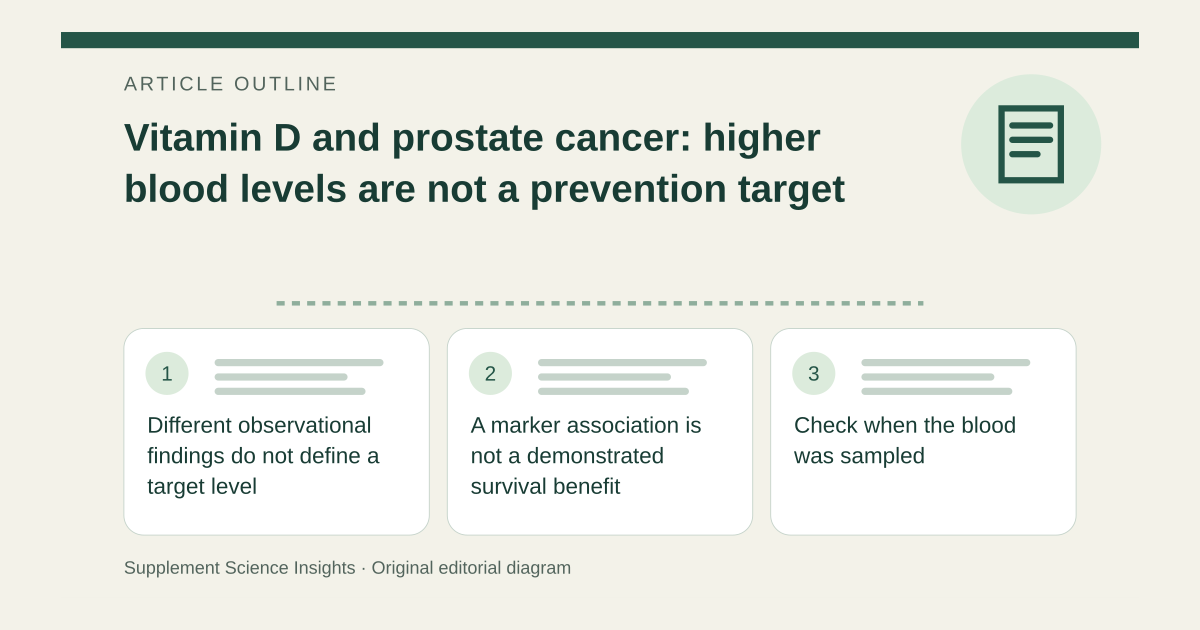
Different observational findings do not define a target level
ODS describes prostate-cancer studies with differing associations: some linked higher vitamin D levels with higher risk, others found no relationship, and some differed by cancer aggressiveness. A single favorable association cannot represent that mixed record. [1]
Measurements taken before diagnosis address a different question from measurements years after treatment. Neither observational design, on its own, demonstrates the effect of prescribing a supplement to raise the level. [1]
A marker association is not a demonstrated survival benefit
The source describes conflicting observational mortality findings and a meta-analysis of randomized trials that found no significant total-mortality difference with vitamin D. It states that whether supplementation lengthens cancer-related survival is unclear. [1]
This uncertainty does not justify aiming for an unusually high laboratory value or substituting supplements for screening discussions or treatment. A diagnosed deficiency can be addressed for its own clinical reasons without presenting correction as a prostate-cancer therapy. [1]
Check when the blood was sampled
Imagine a study measures vitamin D several years after prostate-cancer treatment and relates the value to subsequent outcomes. That design cannot directly show that the same level would have prevented the original diagnosis. Timing is part of the evidence, not a minor detail.
| Observation | Meaning |
|---|---|
| Before diagnosis | Possible risk association |
| After treatment | Possible prognosis association |
| Assigned supplementation | Tests an intervention under defined conditions |
Sources for this article
- NIH ODS: Vitamin D
Source consulted: 2026-09-17. This is a reference resource, not a claim that we conducted the studies or tested a product.