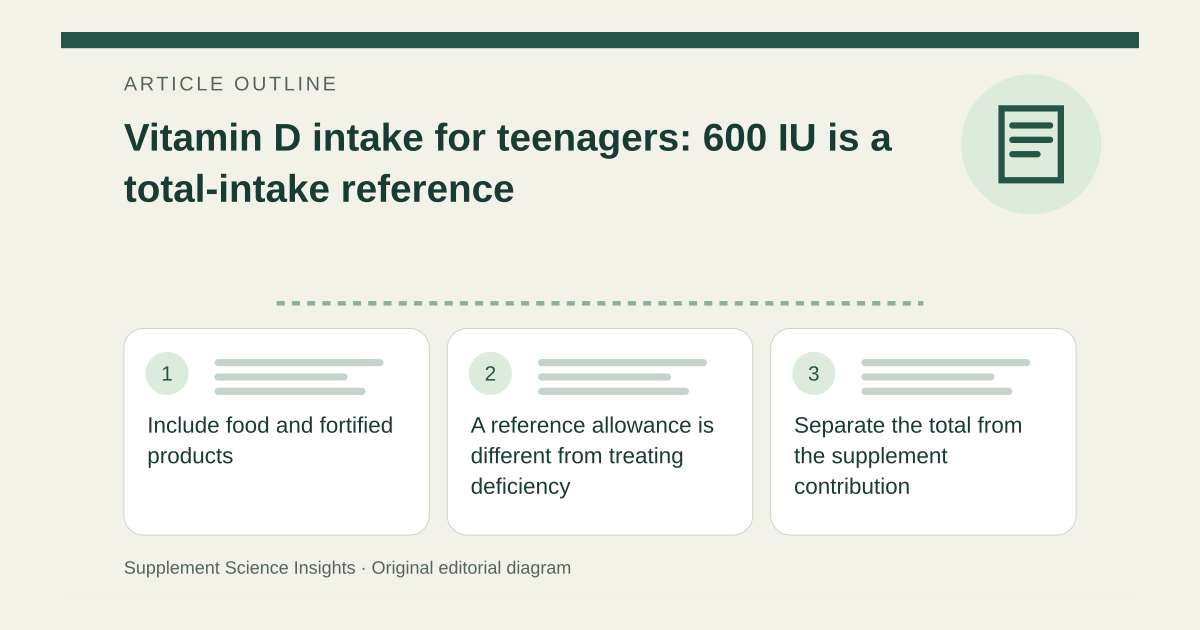
Include food and fortified products
The reference amount includes vitamin D obtained from the overall diet and supplements. Fortified milk or alternatives, other fortified foods and existing vitamin products can all contribute. [1]
A teenager already receiving vitamin D from several sources should not have each source treated as if it were the only one. Read the actual amount per serving when adding them together. [1]
A reference allowance is different from treating deficiency
A diagnosed deficiency or medical condition may require an individualized plan. The routine allowance should not be substituted for that plan, and an upper intake limit should not be treated as a target. [1]
NIH ODS lists a general upper limit of 100 mcg, or 4,000 IU, for this age group. Clinician-supervised treatment is a different context; the upper limit does not imply that every teenager benefits from taking that amount. [1]
Separate the total from the supplement contribution
Imagine foods supply 200 IU and an existing product supplies 400 IU daily. The combined amount is 600 IU; adding another 600 IU would be additional exposure, not merely reaching that reference.
| Detail | Interpretation |
|---|---|
| 600 IU | Routine total-intake reference |
| Food plus supplements | Count together |
| 4,000 IU upper limit | Not a goal |
Sources for this article
- Vitamin D - Health Professional Fact Sheet
Source consulted: 2026-09-17. This is a reference resource, not a claim that we conducted the studies or tested a product.