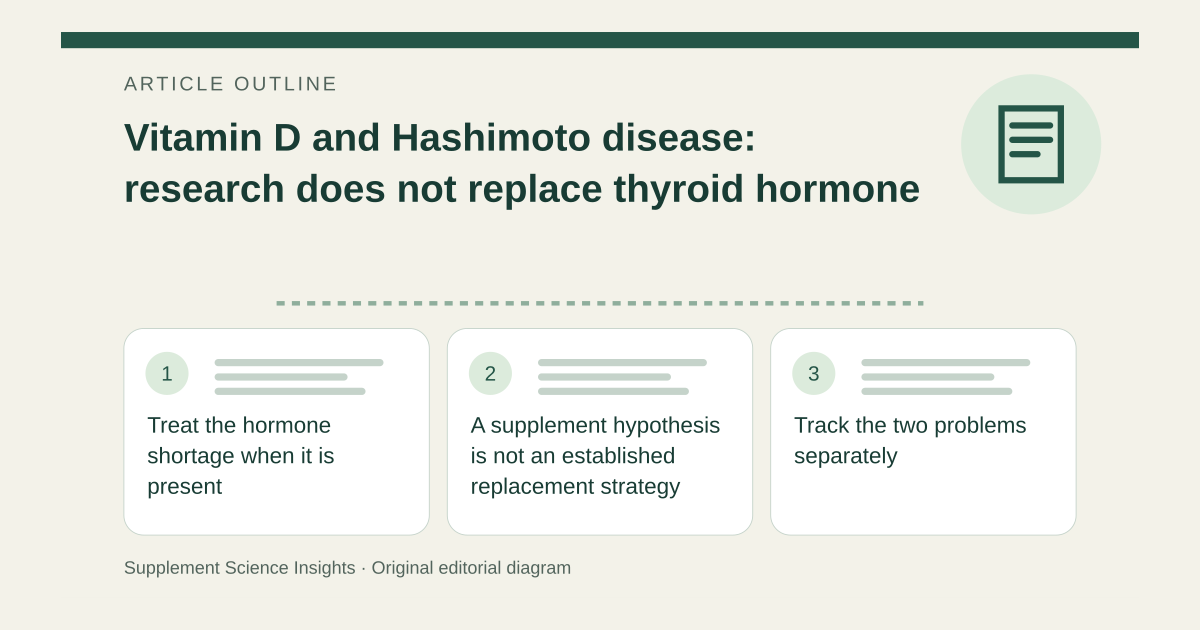
Treat the hormone shortage when it is present
NIDDK describes Hashimoto disease as an autoimmune condition that can damage the thyroid and lead to hypothyroidism. Treatment depends on whether the gland has become sufficiently impaired; some people are monitored before a hormone shortage develops. [1]
When replacement is needed, levothyroxine supplies thyroxine, the hormone the thyroid is not making adequately. Vitamin D is a different substance and cannot be substituted for that hormone. [1]
A supplement hypothesis is not an established replacement strategy
NIDDK notes ongoing research on vitamin D and selenium in Hashimoto disease, while stating that specific guidance on those supplements is not available in its patient resource. That is different from evidence that vitamin D cures the autoimmune condition. [1]
If vitamin D deficiency is also identified, its management has a separate purpose. Thyroid symptoms and thyroid function tests still need follow-up rather than assuming that correction of one nutrient result resolves both issues. [1]
Track the two problems separately
Imagine vitamin D improves during supplementation while thyroid hormone remains low. The improved nutrient result does not demonstrate adequate thyroid replacement.
| Detail | Interpretation |
|---|---|
| Vitamin D result | Nutrient assessment |
| Thyroid function | Hormone assessment |
| Levothyroxine | Replaces thyroid hormone |
Sources for this article
- Hashimoto's Disease - NIDDK
Source consulted: 2026-09-19. This is a reference resource, not a claim that we conducted the studies or tested a product.