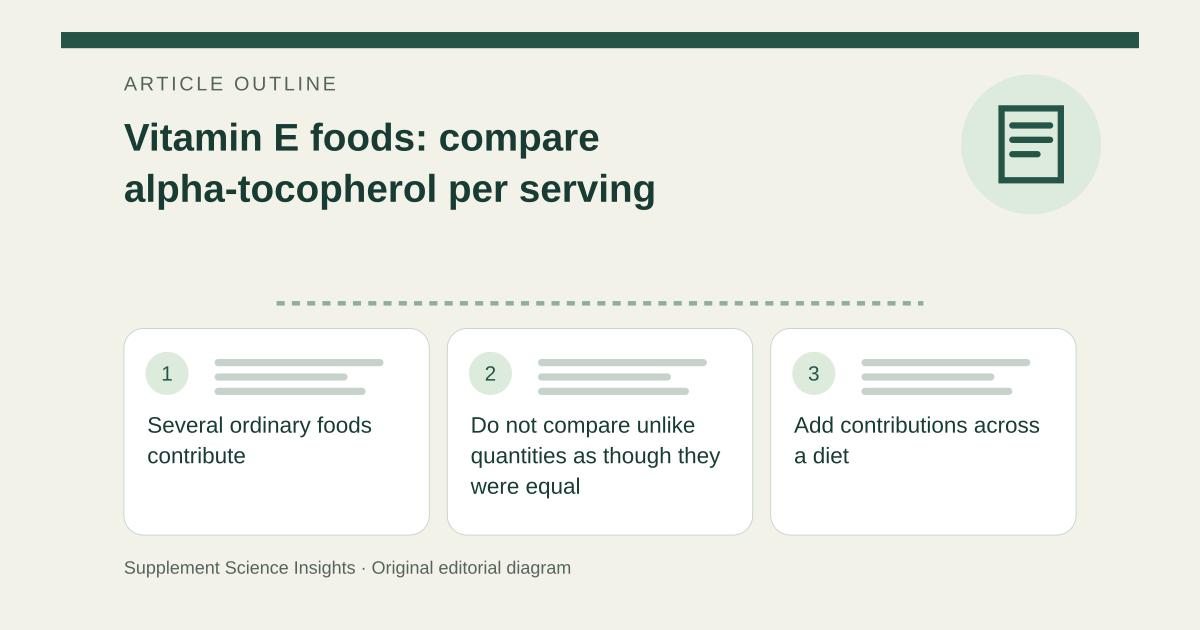
Several ordinary foods contribute
The ODS table lists 7.4 milligrams of alpha-tocopherol in one ounce of dry-roasted sunflower seeds and 6.8 milligrams in one ounce of dry-roasted almonds. These are substantial contributions to the adult reference of 15 milligrams daily. [1]
Vegetables and fruits can contribute smaller amounts. The same table lists 1.9 milligrams in half a cup of boiled spinach and 1.1 milligrams in a medium kiwifruit. [1]
Do not compare unlike quantities as though they were equal
An ounce of nuts, a tablespoon of oil and a cup of vegetables are different portions. A ranking based only on the printed vitamin amount can conceal those differences. [1]
Use the amount in the portion actually eaten. Reference composition also varies with the food and preparation, so the table is not a precise assay of each serving. [1]
Add contributions across a diet
Imagine a food record uses one ounce of the listed almonds and one medium kiwifruit. Their listed vitamin E contributions total 7.9 milligrams: 6.8 plus 1.1.
That sum describes those entries, not the whole diet. Other foods still count, and the example does not prescribe portions or account for an individual allergy.
| Detail | Interpretation |
|---|---|
| Almonds, stated ounce | 6.8 mg |
| One medium kiwifruit | 1.1 mg |
| Combined contribution | 7.9 mg; other foods still count |
Dietary adequacy differs from a treatment claim
Alpha-tocopherol is the form used for human vitamin E requirements. Supplying it through food supports nutrition; it does not establish that additional high-dose vitamin E prevents disease. [1]
The appropriate intake reference varies by life stage, including lactation. This page compares food contributions rather than selecting a supplement or treating a diagnosed deficiency. [1]
Sources for this article
- NIH ODS: Vitamin E
Source consulted: 2026-09-17. This is a reference resource, not a claim that we conducted the studies or tested a product.