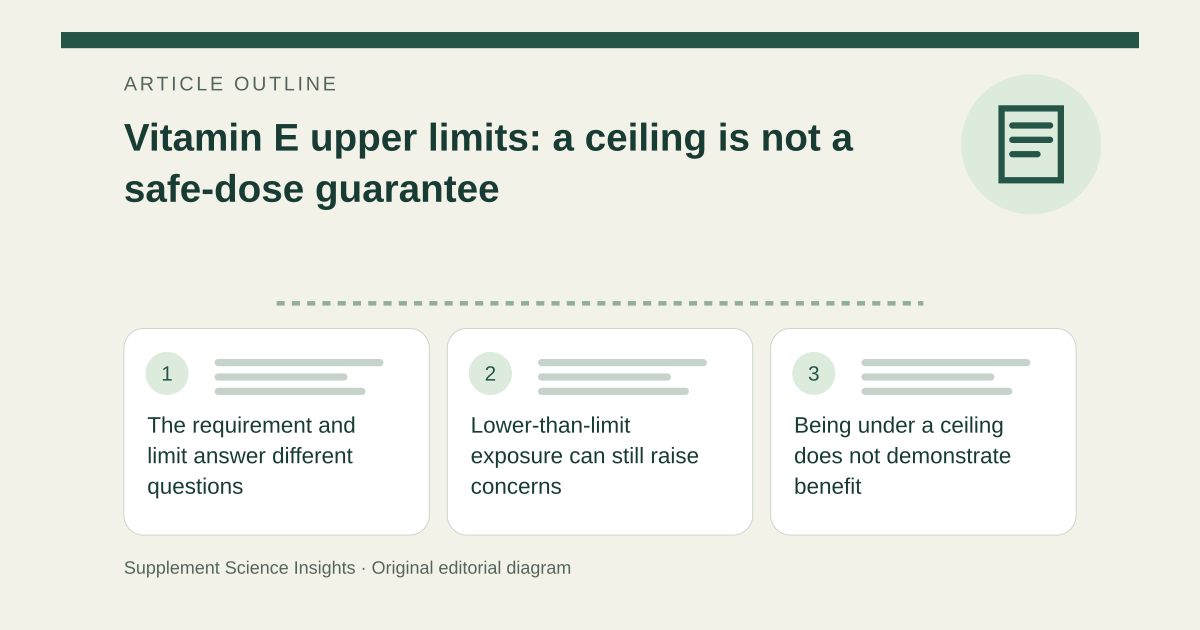
The requirement and limit answer different questions
ODS lists a daily vitamin E requirement of 15 mg for people aged 14 and older, rising to 19 mg during lactation. The adult upper limit of 1,000 mg applies to supplemental alpha-tocopherol and was based on concern about hemorrhagic effects. [1]
The upper limit is not a recommended dose or a target to approach. Younger age groups have lower limits, and a lack of an infant limit does not mean unrestricted infant supplementation is appropriate. [1]
Lower-than-limit exposure can still raise concerns
ODS discusses trial harms at supplemental amounts below the upper limit, including hemorrhagic stroke findings and increased prostate-cancer risk in a particular high-dose trial. The populations and preparations matter, and no one number guarantees freedom from harm. [1]
Vitamin E can also affect platelet aggregation and vitamin K-dependent clotting. Anticoagulant or antiplatelet use needs a specific review; the source does not establish a precise universal interaction threshold or a pre-procedure stopping schedule. [1]
Being under a ceiling does not demonstrate benefit
Imagine a supplement amount is below the adult upper limit but well above the daily nutritional requirement. That arithmetic answers only its relation to two references. It does not show that the amount improves health, fits the user’s medicines or is appropriate for long-term use.
| Entry | Meaning |
|---|---|
| RDA | Nutritional adequacy reference |
| Upper limit | Population safety ceiling |
| Below the limit | Not proof of benefit or individual suitability |
Sources for this article
- NIH ODS: Vitamin E
Source consulted: 2026-09-17. This is a reference resource, not a claim that we conducted the studies or tested a product.