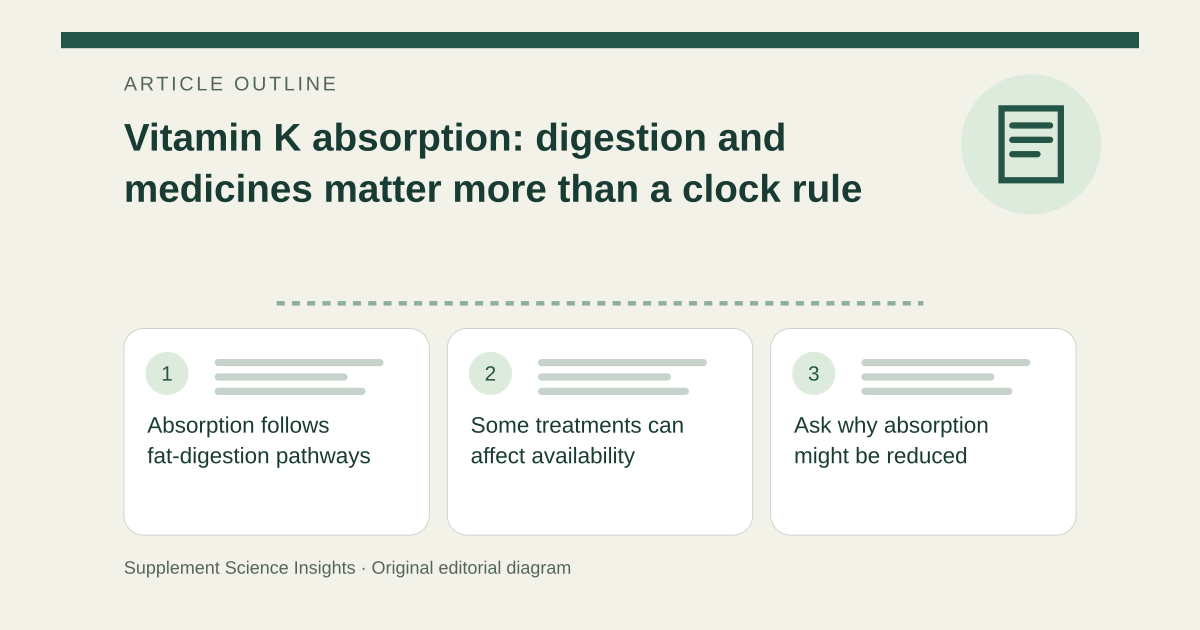
Absorption follows fat-digestion pathways
ODS describes vitamin K entering mixed micelles with the help of bile and pancreatic enzymes, then being absorbed by cells of the small intestine. It is transported in lipid-containing particles rather than behaving like a simple freely absorbed water-soluble substance. [1]
This physiology explains why fat malabsorption can affect vitamin K status. It does not define one exact amount of fat that every person must eat with a supplement or establish a universally superior time of day. [1]
Some treatments can affect availability
Bile acid sequestrants can reduce absorption of vitamin K and other fat-soluble vitamins. Orlistat can also reduce fat-soluble vitamin absorption. The clinical importance and appropriate schedule depend on the actual treatment and instructions. [1]
A person with malabsorption or an interacting medicine needs advice tied to that cause. Simply moving the tablet from morning to evening may not address the underlying problem. [1]
Ask why absorption might be reduced
Imagine someone with a gastrointestinal condition asks for the best hour to take K2. Before choosing a clock time, the clinician needs to understand the condition, medicine use and the reason for supplementation.
The answer may involve evaluating absorption and nutritional status rather than applying a general schedule from a product advertisement.
| Point | Interpretation |
|---|---|
| Digestive condition | May change availability |
| Exact medicine | Determines relevant instructions |
| Morning versus evening | Does not explain every absorption problem |
Do not equate absorption with clinical benefit
ODS notes limited comparative data on the bioavailability of different vitamin K supplement forms. Longer circulation or a changed blood marker does not alone establish fewer fractures or improved cardiovascular outcomes. [1]
Warfarin-related consistency is a separate concern from absorption optimization. Any intended change in vitamin K exposure should be reviewed with the prescribing team if a vitamin K antagonist is used. [1]
Sources for this article
- NIH ODS — Vitamin K: Health Professional Fact Sheet
Source consulted: 2026-09-17. This is a reference resource, not a claim that we conducted the studies or tested a product.