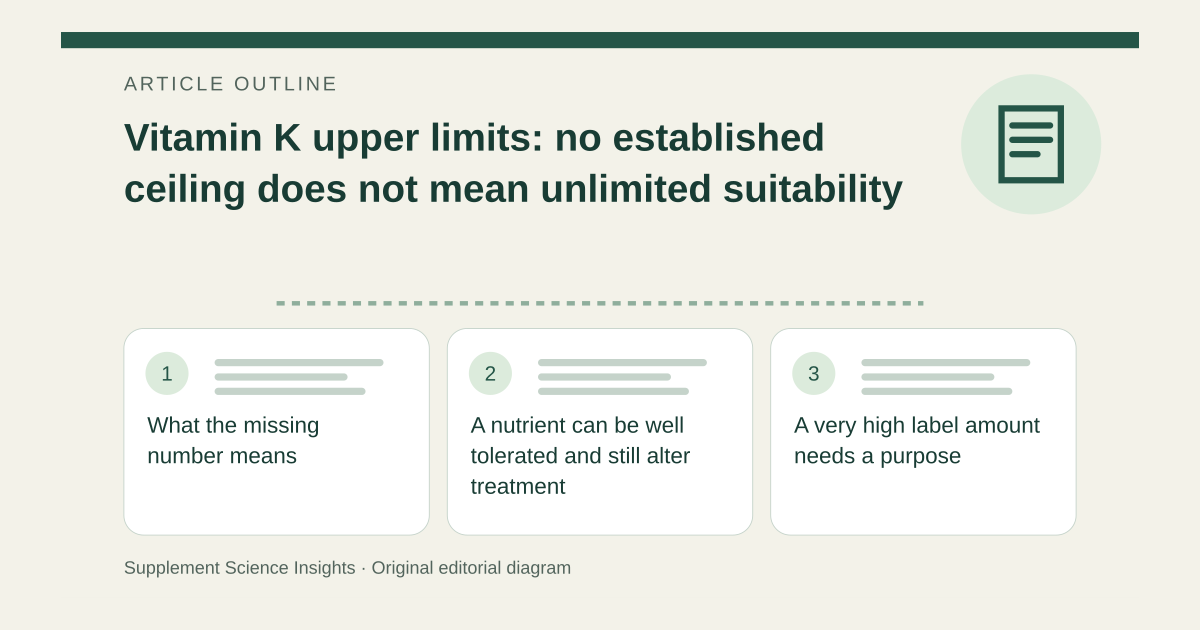
What the missing number means
ODS explains that the Food and Nutrition Board did not establish a tolerable upper intake level for vitamin K because of its low toxicity potential. This differs from nutrients with a numerical ceiling based on observed adverse effects. [1]
The absence of a UL is not evidence that every form, amount and clinical situation has been studied without risk. It also does not identify an amount needed for better bone or cardiovascular outcomes. [1]
A nutrient can be well tolerated and still alter treatment
Vitamin K can interact seriously with warfarin and similar vitamin K antagonists. Sudden intake changes can increase or decrease the anticoagulant effect, making consistency and clinical review important. [1]
An upper-limit table does not replace a drug-interaction check. The statement that vitamin K has no established UL should not be used to clear a supplement for someone receiving anticoagulation treatment. [1]
A very high label amount needs a purpose
Imagine a person compares a modest multivitamin amount with a much larger K2 product and assumes the larger amount must be preferable because no UL is listed. The missing limit supplies no evidence of added benefit.
The relevant questions are why the product is being considered, what evidence supports the intended outcome and whether medicines or medical conditions affect suitability.
| Point | Interpretation |
|---|---|
| No numerical ceiling established | Not a recommended high dose |
| Warfarin treatment | Interaction remains important |
| Different K compounds | Identity and evidence still need checking |
Do not erase differences between compounds
Human supplements commonly use K1 or specified menaquinones such as MK-4 or MK-7. Menadione, sometimes called K3, has a different safety history and should not be swept into a blanket claim about interchangeable vitamin K products. [1]
This page does not establish a personal maximum or recommend high-dose use. It explains the limited meaning of the reference table and the questions it leaves unanswered. [1]
Sources for this article
- NIH ODS — Vitamin K: Health Professional Fact Sheet
Source consulted: 2026-09-17. This is a reference resource, not a claim that we conducted the studies or tested a product.