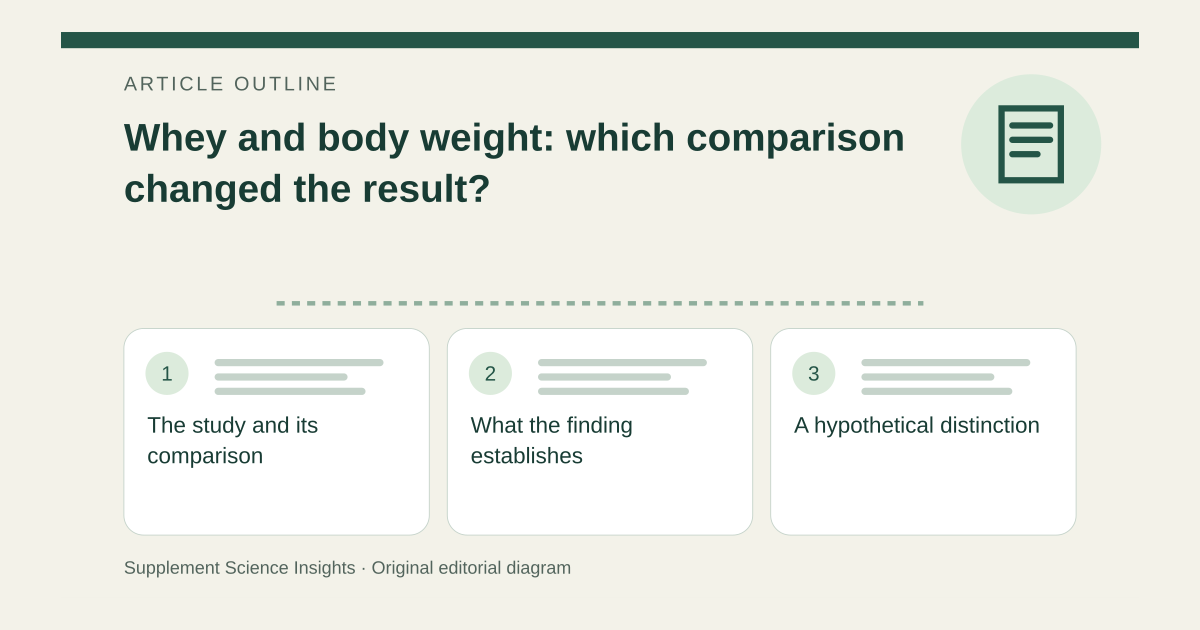
The study and its comparison
Ninety adults with overweight or obesity entered a 23-week study of whey, soy or an energy-matched carbohydrate supplement. Protein supplements supplied about 56 grams daily, without a separate prescribed weight-loss diet. [1]
Weight and fat mass were lower with whey than carbohydrate at the end of the study. Whey-versus-soy and soy-versus-carbohydrate differences for those outcomes were not significant; lean mass did not differ. [1]
What the finding establishes
A positive comparison against carbohydrate cannot be relabeled a demonstrated weight advantage over soy. Waist findings also should not replace the separate weight results. USDA and the US Whey Protein Research Consortium funded the work; authors declared no conflicts. [1]
A hypothetical distinction
Imagine A differs from C but not B. That result does not establish that A beats B.
| Detail | Interpretation |
|---|---|
| Measured outcome | Keep the endpoint specific |
| Study preparation | Not every retail product |
| Remaining uncertainty | Not resolved by a mechanism |
Sources for this article
- Whey Protein but Not Soy Protein Supplementation Alters Body Weight and Composition in Free-Living Overweight and Obese Adults - PMC
Source consulted: 2026-09-19. This is a reference resource, not a claim that we conducted the studies or tested a product.