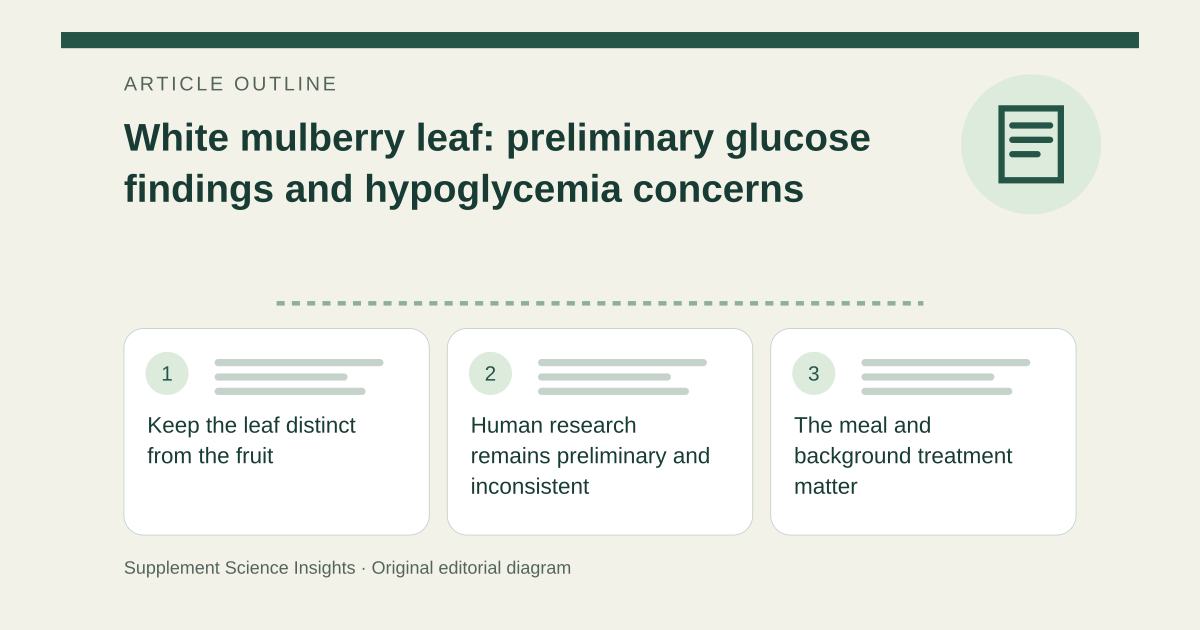
Keep the leaf distinct from the fruit
White mulberry, Morus alba, appears in foods and botanical products, but leaf research concerns a particular plant part. A berry product cannot automatically borrow findings from a leaf extract, and one leaf preparation may differ from another. [1]
Record the plant part, extraction and serving before evaluating a blood-sugar claim. A constituent or antioxidant description can characterize a material without establishing that it improves diabetes control in people. The intervention needs to stay identifiable through the whole argument. [1]
Human research remains preliminary and inconsistent
NCCIH describes several studies suggesting lower elevated blood glucose, but some evidence is preliminary or comes from nonhuman research. Other trials have found no glucose effect. These differences prevent a dependable general conclusion. [1]
A result immediately after a meal, a fasting measurement and a longer-term glucose marker answer different questions. None should be silently substituted for the others. Nor does a laboratory antioxidant property establish fewer diabetes complications or permission to reduce a prescribed treatment. [1]
The meal and background treatment matter
A post-meal study needs to describe the meal, timing of measurements and whether participants used glucose-lowering medicines. Those details help determine what was actually tested. An intervention examined with one standardized meal may not have the same relevance to a person's usual diet.
Check the comparison group and the variability of results. A graph can look persuasive when its vertical scale is narrow, so the units and absolute difference should remain visible. A smaller average glucose rise does not establish that every participant benefited or that the effect persisted.
Additive glucose lowering is a concern
Digestive adverse effects can include bloating, gas, constipation or loose stools. Short studies without serious harm do not establish long-term safety or safety for every extract. [1]
White-mulberry leaf may increase the risk of low blood glucose when combined with diabetes medicines. That possibility should be discussed with the care team rather than addressed by independently adjusting medication. Pregnancy and breastfeeding safety information is limited. Leaf findings also do not settle the safety of concentrated berry preparations. [1]
Report the specific glucose window
Imagine a fictional trial finds a smaller glucose rise at one hour after a standardized meal but does not measure longer-term glucose control. Its conclusion concerns that meal-test window, not established improvement over several months.
If participants were not taking diabetes medicines, the trial also leaves combination-use questions unresolved. The example illustrates applicability and does not prescribe a meal, extract or monitoring schedule.
| Hypothetical study detail | Scope |
|---|---|
| One-hour meal response | Short measurement window |
| Long-term marker absent | No sustained-control conclusion |
| No diabetes medicines studied | Combination safety unresolved |
A narrow result should stay narrow
This overview does not recommend white mulberry leaf for diabetes management. The most useful claim identifies the plant part, glucose endpoint, population and concurrent treatment. Preliminary findings and the potential for low glucose should be considered together.
Sources for this article
- NCCIH — White mulberry leaf: Usefulness and Safety
Source consulted: 2026-09-17. This is a reference resource, not a claim that we conducted the studies or tested a product.