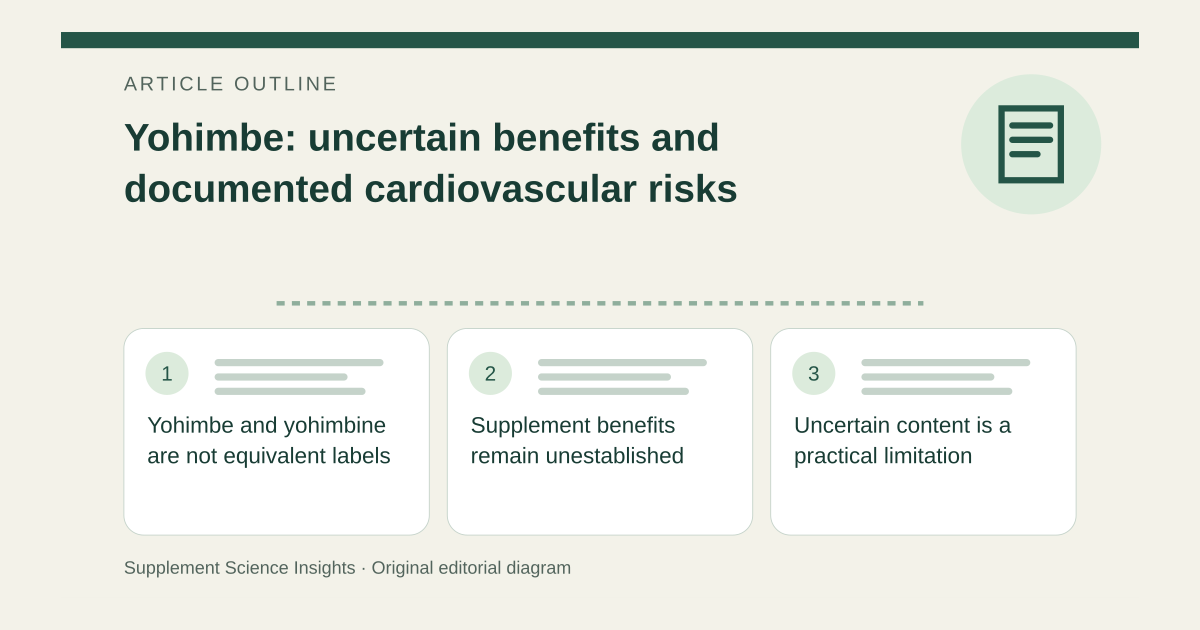
Yohimbe and yohimbine are not equivalent labels
Yohimbe is a botanical source of yohimbine. A bark-containing supplement, a highly processed extract and a medicine containing a specified chemical should not be treated as the same intervention. Products can differ greatly in their actual yohimbine content. [1]
A front-label milligram amount may describe total botanical material rather than the active constituent. Without a reliable constituent declaration and identity evidence, matching the printed mass across products does not establish comparable exposure. [1]
Supplement benefits remain unestablished
NCCIH finds insufficient evidence to determine whether yohimbe supplements help erectile dysfunction, athletic performance, obesity or another condition. Research involving a specified yohimbine medicine cannot simply be transferred to a retail bark product. [1]
A proposed mechanism is not enough to establish useful performance or weight outcomes. A study should identify the preparation, population, comparator and relevant endpoint. If those details are missing, a confident benefit claim is not justified by the ingredient name alone. [1]
Uncertain content is a practical limitation
Analyses of marketed products have found substantial variation and incomplete information about yohimbine amounts. Some products have contained highly processed or synthetic material. These findings make it inappropriate to derive a constituent dose from an assumed average percentage. [1]
A quality report would need to concern the actual product and batch. Even a reliable amount would not establish a favorable benefit-to-harm balance; it would only improve the exposure information. Accurate composition and demonstrated usefulness are separate requirements. [1]
Serious adverse effects have been documented
Yohimbine has been associated with abnormal heart rhythms, blood-pressure problems, heart attacks and seizures. Reports involving yohimbe also include rapid heartbeat, anxiety and gastrointestinal symptoms. These concerns deserve more weight than a routine energy or performance marketing claim. [1]
Yohimbe should not be used with monoamine oxidase inhibitors or tricyclic antidepressants. Other medicines require professional review, and pregnancy or breastfeeding use may be unsafe. This page does not supply a dose, cycling strategy or instructions intended to manage around these risks. [1]
Do not invent a constituent percentage
Imagine a fictional label lists 500 mg yohimbe bark but gives no yohimbine amount. It is not valid to assume that 1 percent is yohimbine and assign a 5 mg dose. The arithmetic is simple, but the assumed composition is unsupported.
A second label with a declared constituent amount still requires identity and safety assessment. The example explains missing data rather than recommending either preparation.
| Fictional declaration | Conclusion |
|---|---|
| 500 mg bark only | Yohimbine amount unknown |
| Assumed 1% | Unsupported input |
| Calculated 5 mg | Not a valid exposure estimate |
The missing information is not a reason to guess
Uncertain benefit, variable composition and serious adverse effects make a casual supplement comparison inadequate. This reference does not recommend yohimbe for sexual function, weight loss or exercise. A precise ingredient amount would not erase the documented risks.
Sources for this article
- NCCIH — Yohimbe: Usefulness and Safety
Source consulted: 2026-09-17. This is a reference resource, not a claim that we conducted the studies or tested a product.