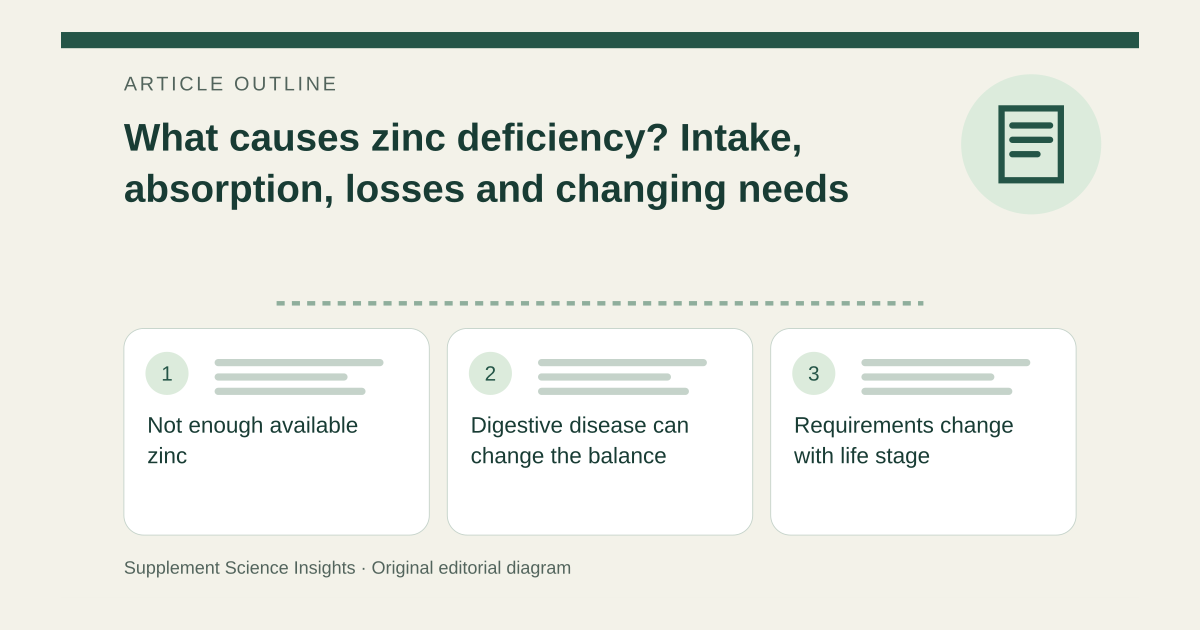
Not enough available zinc
A limited diet can provide too little zinc. The amount available for absorption matters as well as the amount listed in food composition tables. ODS notes that phytates in legumes and whole grains can bind zinc, contributing to lower bioavailability in some vegetarian and vegan diets. [1]
This is not a diagnosis based on a dietary label. Plant foods still contribute zinc, and a varied, planned diet differs from a restricted menu. Food preparation, fortification and the actual foods eaten all belong in the assessment. [1]
Digestive disease can change the balance
People with inflammatory bowel disease, celiac disease or certain gastrointestinal operations are at increased risk of zinc inadequacy. ODS describes poor intake, impaired absorption and inflammation-related losses as contributing mechanisms in relevant groups. [1]
Alcohol use disorder can also combine limited food intake with reduced intestinal zinc absorption and increased urinary loss. These are different mechanisms from simply choosing too few zinc-rich foods, and they can require attention to the underlying condition. [1]
Requirements change with life stage
Pregnancy and lactation increase zinc requirements. After about six months, breast milk alone no longer supplies enough zinc to meet an infant’s needs; age-appropriate complementary foods or formula contribute. Infant nutrition needs pediatric guidance rather than an adult supplement calculation. [1]
A higher requirement raises the importance of intake planning, but does not prove deficiency in every person in that life stage. Risk groups help identify who may need closer assessment. [1]
Similar intake, different circumstances
Imagine two adults describe similar zinc-containing meals, but one has active digestive disease and difficulty eating. The menus alone do not establish equivalent zinc status, because intake consistency, absorption and illness differ.
The useful next question is what is driving the suspected inadequacy. A larger supplement label does not answer that question.
| Question | What it establishes |
|---|---|
| Is intake consistently adequate? | Food access and restriction matter |
| Could absorption or losses differ? | Digestive disease and alcohol history matter |
| Have needs increased? | Life stage changes the intake context |
Verify the problem and its cause
Blood zinc measures have limitations and should be considered with symptoms and risk factors. A dietary explanation should not be assumed merely because a result is low, nor should a normal-looking menu rule out an absorption problem. [1]
If deficiency is suspected, bring the food history, relevant diagnoses and complete supplement list to the assessment. The aim is an appropriate replacement plan and attention to the reason zinc became inadequate. [1]
Sources for this article
- NIH ODS — Zinc: Health Professional Fact Sheet
Source consulted: 2026-09-17. This is a reference resource, not a claim that we conducted the studies or tested a product.