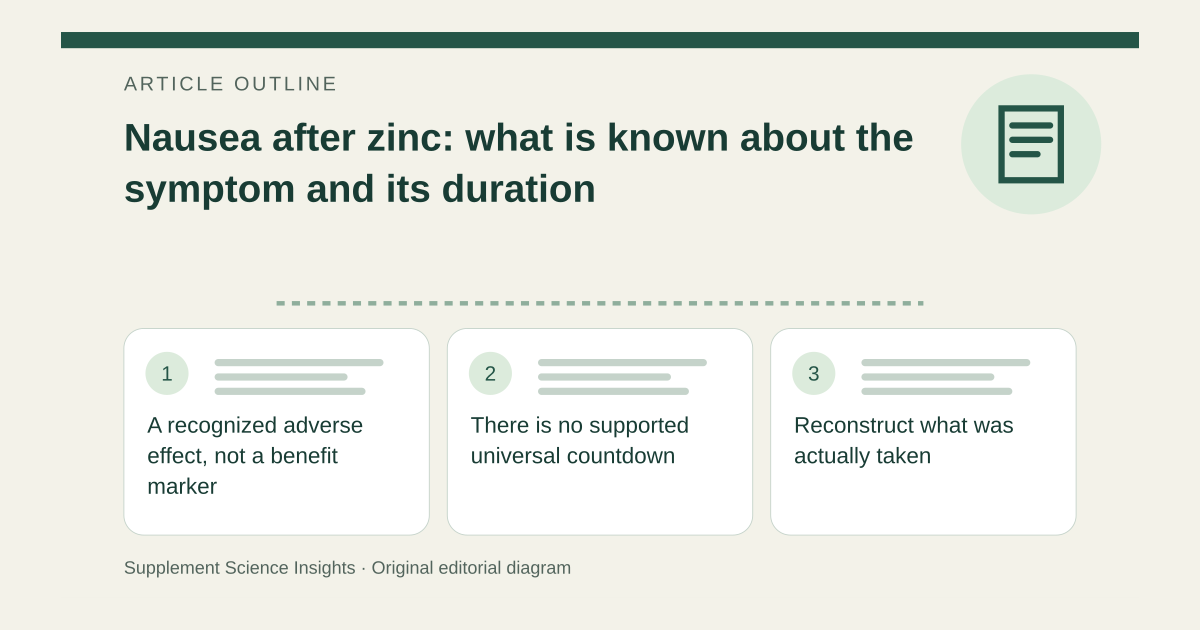
A recognized adverse effect, not a benefit marker
Nausea, vomiting and gastric distress are among the adverse effects ODS associates with high zinc intake. Feeling sick after taking zinc is not evidence of improved immune activity or a sign that a larger amount is needed. [1]
The timing may suggest a connection, but nausea has other possible causes. The product, actual serving, other ingredients and other medicines all matter when deciding whether zinc is responsible. [1]
There is no supported universal countdown
The ODS fact sheet identifies nausea but does not provide a standard duration for an episode after a supplement. It cannot support promises such as “it will always stop within an hour” or a fixed waiting period before another dose. [1]
A symptom that is persistent or worsening should be assessed rather than managed by repeating zinc to test the theory. Record when it began and whether other symptoms occurred; those details are more useful than a generic estimate taken from an unrelated experience. [1]
Reconstruct what was actually taken
Imagine someone develops nausea after taking a zinc tablet while using several cold lozenges over the same day. Looking only at the tablet label misses additional zinc and potentially other ingredients.
The useful record includes each product, servings, timing and symptom onset. It does not prove toxicity, but it makes a pharmacist or clinician review more informative.
| Question | What it establishes |
|---|---|
| Product and actual servings | Clarify exposure rather than label strength alone |
| Timing of symptoms | Describe the sequence without proving causation |
| Other medicines or cold products | Identify possible overlapping explanations |
Review the regimen before trying a quick fix
The adult upper intake limit is 40 mg per day from food and supplements, but it is not a promise that everyone tolerates every smaller amount. Medical treatment has a different context and should be reviewed with its prescriber. [1]
Changing the timing of a dose can also affect medicine interactions, so an unexplained symptom should not be answered with one universal scheduling trick. ODS identifies interactions with some antibiotics and penicillamine; a pharmacist can check the actual combination and whether continued zinc use is appropriate. [1]
Sources for this article
- NIH ODS — Zinc: Health Professional Fact Sheet
Source consulted: 2026-09-17. This is a reference resource, not a claim that we conducted the studies or tested a product.