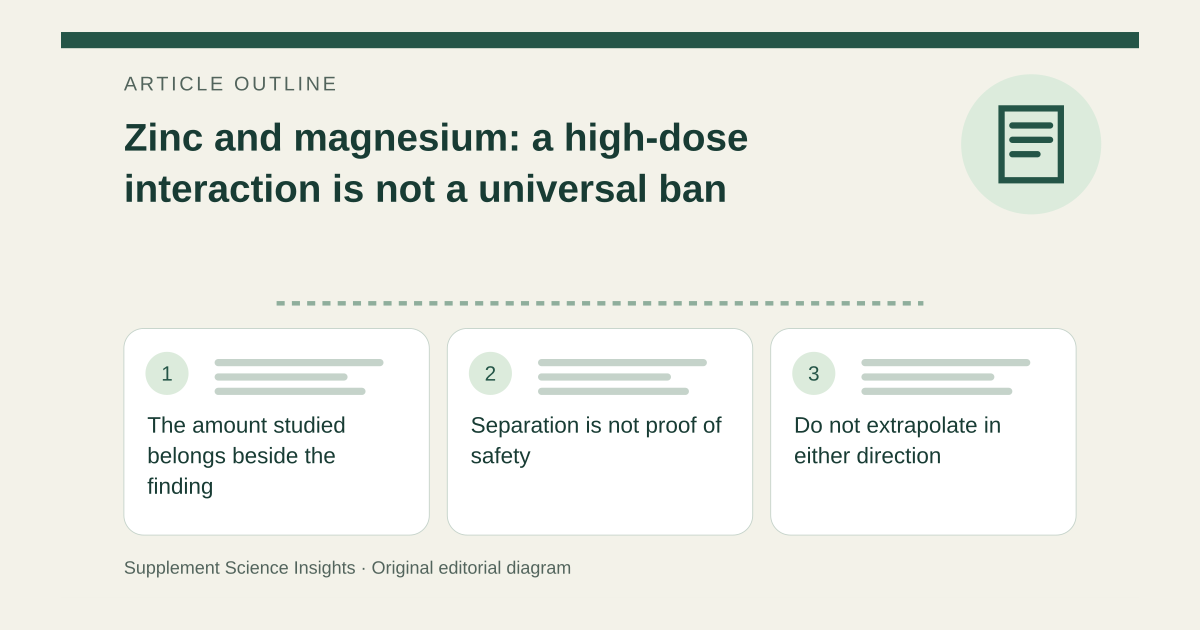
The amount studied belongs beside the finding
The ODS magnesium fact sheet cites a study in which 142 mg of supplemental zinc daily interfered with magnesium absorption and balance. The source calls this a very high dose. Removing that exposure detail makes the finding appear broader than the evidence. [1]
The study does not establish that all zinc and magnesium combinations are harmful, or that a particular retail combination has been tested. Dose, actual use and population remain part of the question. [1]
Separation is not proof of safety
The cited finding does not provide a universal spacing interval that cancels the effects of excessive exposure. Moving tablets to different meals cannot be assumed to make a very high intake appropriate. [1]
Record zinc and magnesium separately, including overlapping multivitamins and magnesium-containing medicines. Magnesium can cause gastrointestinal effects, and reduced kidney function increases toxicity risk. A compatibility question needs the quantities and health context, not merely the two ingredient names. [1]
Do not extrapolate in either direction
Imagine a study used 142 mg of zinc while a different product supplies a much smaller labeled amount. The exposures differ, so identical effects cannot be assumed. Conversely, the difference alone does not prove that the second product is necessary or safe for its intended user.
| Observation | Meaning |
|---|---|
| Study zinc amount | 142 mg daily in the cited report |
| Different product amount | A different exposure |
| Universal safety conclusion | Not supplied by that comparison |
Sources for this article
- NIH ODS: Magnesium
Source consulted: 2026-09-17. This is a reference resource, not a claim that we conducted the studies or tested a product.