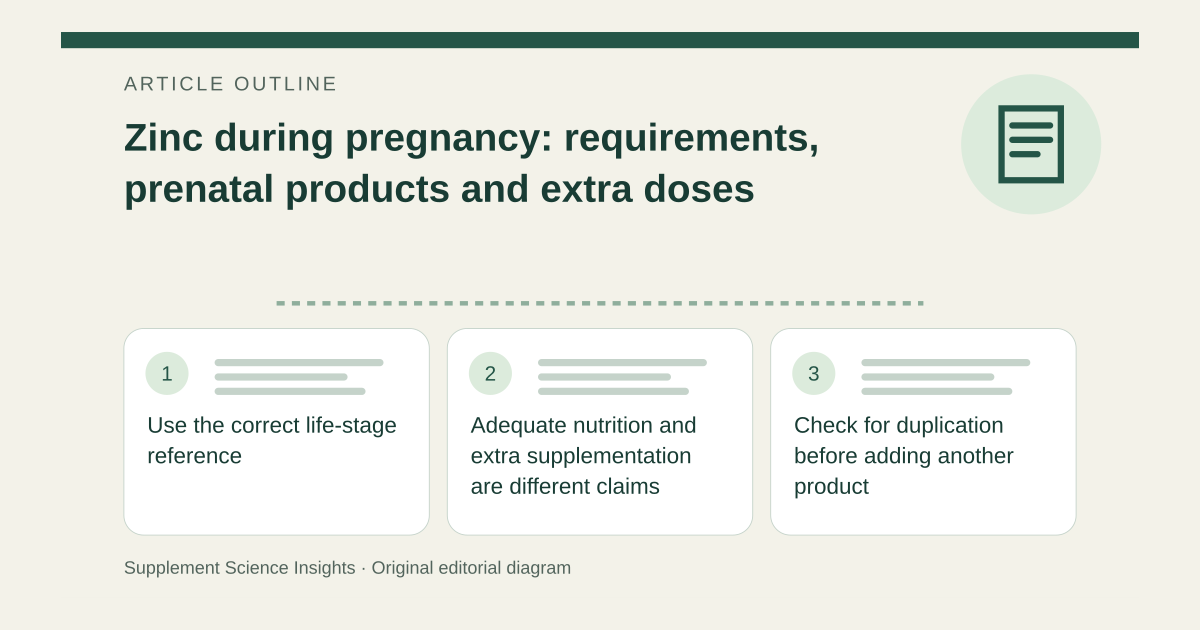
Use the correct life-stage reference
For pregnancy at age 19 or older, the U.S. recommended zinc intake is 11 mg per day; for pregnancy at ages 14–18, it is 12 mg per day. These amounts include food and supplements. Lactation has different reference values: 12 mg for adults and 13 mg for adolescents. [1]
A pregnancy requirement is not an instruction to add that amount on top of a prenatal product. The first step is checking what the existing product and usual diet provide, including any separate immune-support preparations. [1]
Adequate nutrition and extra supplementation are different claims
Zinc is needed for growth and development, and inadequacy is a concern during pregnancy. However, ODS reports that routine zinc supplementation does not appear to lower the risk of low birthweight, stillbirth or neonatal death, while a possible reduction in preterm birth has been reported. [1]
Those distinctions matter: a nutrient’s normal role does not demonstrate improvement in every pregnancy outcome from extra zinc. This page summarizes the government assessment rather than independently appraising the underlying pregnancy trials or recommending zinc to prevent preterm birth. [1]
Check for duplication before adding another product
Imagine a pregnant adult already takes a prenatal supplement and considers a separate zinc product because the requirement is higher than before pregnancy. The prenatal’s zinc content needs to be counted before deciding whether there is any gap.
The same review should identify why any extra product is proposed. Treating a diagnosed deficiency and adding an unneeded wellness product are different decisions.
| Question | What it establishes |
|---|---|
| Age and life stage | Choose the appropriate reference |
| Current prenatal contents | Identify zinc already supplied |
| Reason for an extra product | Distinguish a demonstrated need from duplication |
The upper limit remains a ceiling
The upper intake limit during pregnancy is 40 mg per day for adults and 34 mg for ages 14–18, counting food and supplements. These values are not targets, and medically supervised treatment is considered separately. [1]
Excess zinc can cause nausea and interfere with copper absorption over time. Discuss additional zinc with the maternity clinician, particularly when other supplements or medicines are already being used. [1]
Sources for this article
- NIH ODS — Zinc: Health Professional Fact Sheet
Source consulted: 2026-09-17. This is a reference resource, not a claim that we conducted the studies or tested a product.