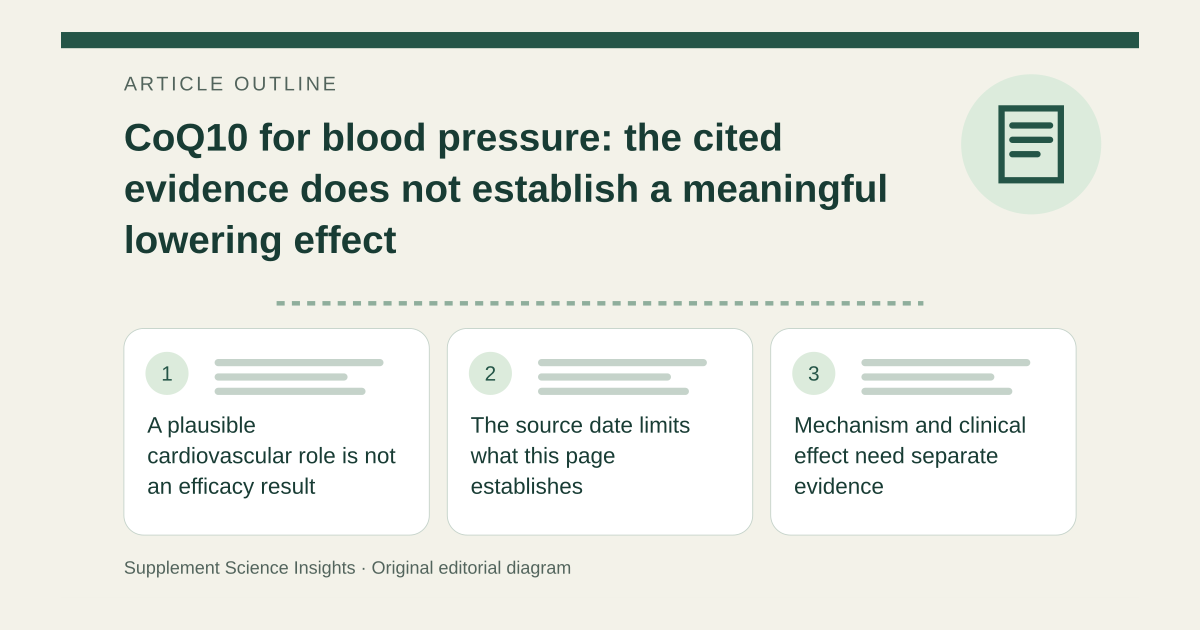
A plausible cardiovascular role is not an efficacy result
CoQ10 participates in cellular processes, but that background does not demonstrate that taking extra CoQ10 lowers blood pressure. NCCIH’s cited synthesis describes the small amount of available evidence as suggesting no meaningful effect on blood pressure. [1]
That conclusion is narrower than proving no effect under every possible condition. It also does not support advertising a reliable reduction or selecting a dose for hypertension. The clinical outcome, participant population and comparator remain essential. [1]
The source date limits what this page establishes
The NCCIH page was updated in January 2019. It is used here for its stated finding and safety cautions, not represented as a systematic search of all research through 2026. A new treatment recommendation would require a current appraisal of appropriate trials and guidance. [1]
CoQ10 may interact with warfarin and insulin. Review its use with the clinician managing cardiovascular care rather than replacing prescribed treatment or assuming an added supplement has no consequences. This article supplies no blood-pressure medication adjustment. [1]
Mechanism and clinical effect need separate evidence
Imagine an advertisement explains CoQ10’s role in cellular energy and then promises lower blood pressure. The first statement does not measure the second. A controlled clinical comparison is needed to establish the promised outcome.
| Observation | Interpretation |
|---|---|
| Cellular role | Biological background |
| Lower blood pressure | Intervention outcome |
| Benefit for a particular patient | Further clinical assessment |
Sources for this article
- NCCIH: Coenzyme Q10
Source consulted: 2026-09-17. This is a reference resource, not a claim that we conducted the studies or tested a product.