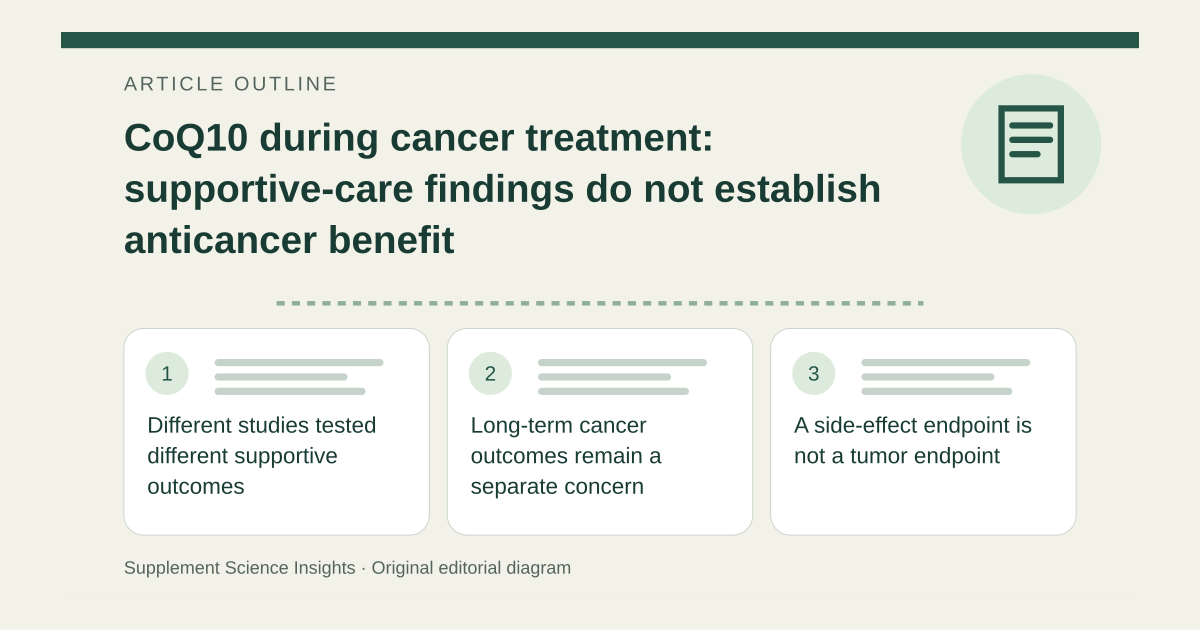
Different studies tested different supportive outcomes
The NCI PDQ patient summary describes a randomized study of 236 breast-cancer patients receiving CoQ10 or placebo, with vitamin E in both groups, over 24 weeks. CoQ10 did not improve fatigue or quality of life compared with placebo. This result concerns those outcomes under that study’s conditions. [1]
A separate trial involving 20 children treated for leukemia or lymphoma reported less doxorubicin-related cardiac harm. Its small size and different endpoint prevent it from establishing broad cancer-treatment benefit or a general supplement protocol. [1]
Long-term cancer outcomes remain a separate concern
NCI notes that supportive-care trials did not establish through long-term follow-up whether CoQ10 reduced treatment effectiveness. It also describes an observational association between antioxidant-supplement use, including CoQ10, and worse breast-cancer outcomes. That association does not isolate a causal effect of CoQ10. [1]
These uncertainties support discussing the exact product with the oncology team before use. CoQ10 is not FDA-approved as a cancer treatment. A biological antioxidant role should not be treated as permission to add it during chemotherapy or radiation. [1]
A side-effect endpoint is not a tumor endpoint
Imagine a small study finds a better cardiac measure but does not determine cancer recurrence or survival. It raises a supportive-care question. The unmeasured cancer outcomes cannot be assumed favorable merely because one organ-related measure improved.
| Observation | Interpretation |
|---|---|
| Fatigue or quality of life | Supportive-care outcome |
| Cardiac measure | Organ-specific outcome |
| Cancer survival | A different outcome requiring evidence |
Sources for this article
- NCI PDQ: Coenzyme Q10 — Patient Version
Source consulted: 2026-09-17. This is a reference resource, not a claim that we conducted the studies or tested a product.