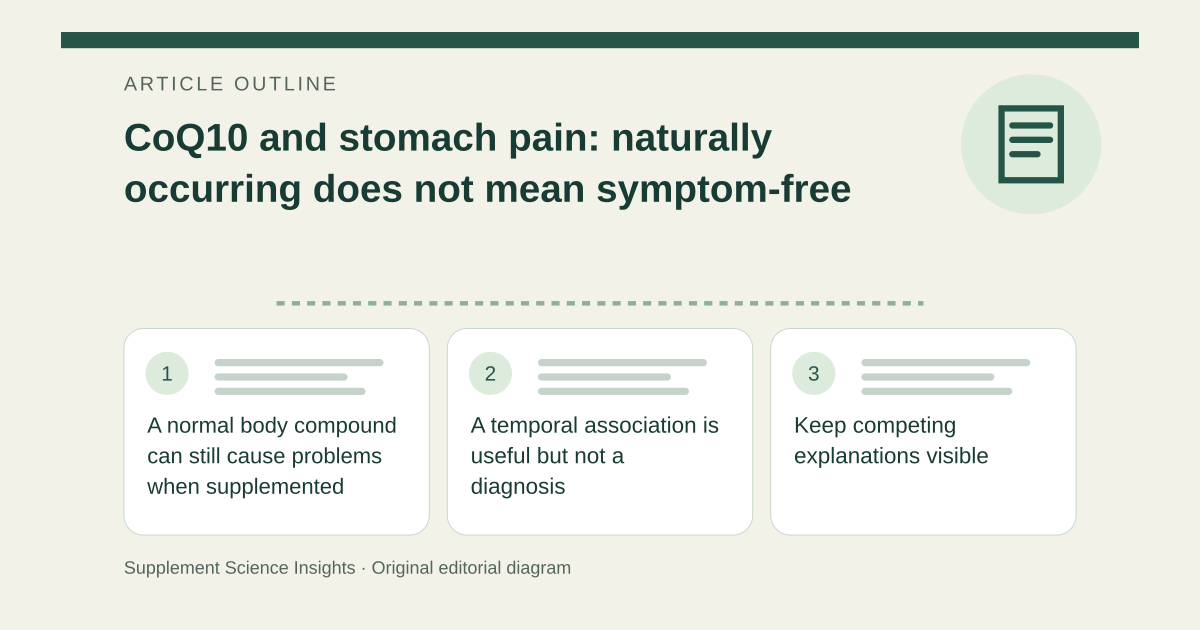
A normal body compound can still cause problems when supplemented
NCCIH lists digestive upset among possible CoQ10 adverse effects. The NCI summary also lists nausea, heartburn and upper abdominal pain among reported effects. These reports show that gastrointestinal discomfort cannot be ruled out simply because the body makes CoQ10. [1][2]
They do not provide a reliable percentage risk for each retail formulation. A capsule can contain other ingredients, and symptoms may have an unrelated cause. The whole product and the sequence of events belong in the assessment. [1][2]
A temporal association is useful but not a diagnosis
Record when the supplement was started, how it was used, other medicines and the symptom pattern. Persistent, severe or worsening pain should be assessed rather than treated as an expected sign that a supplement is working. [1][2]
Do not deliberately repeat a suspect exposure to prove the cause. The sources do not establish a universal switch of form, meal timing or dose that prevents symptoms. They also flag medication interactions, including warfarin and insulin, that a digestive complaint alone would not reveal. [1][2]
Keep competing explanations visible
Imagine discomfort begins after a new multi-ingredient CoQ10 capsule. That timing makes the product relevant, but it does not isolate CoQ10 from the other ingredients or unrelated illness. A complete history supports a better assessment than assuming either certainty or impossibility.
| Observation | Interpretation |
|---|---|
| Symptom after starting | Relevant timing |
| Several ingredients | More than one exposure |
| Cause confirmed | Requires further assessment |
Sources for this article
- NCI PDQ: Coenzyme Q10 — Patient Version
Source consulted: 2026-09-17. This is a reference resource, not a claim that we conducted the studies or tested a product. - NCCIH: Coenzyme Q10
Source consulted: 2026-09-17. This is a reference resource, not a claim that we conducted the studies or tested a product.