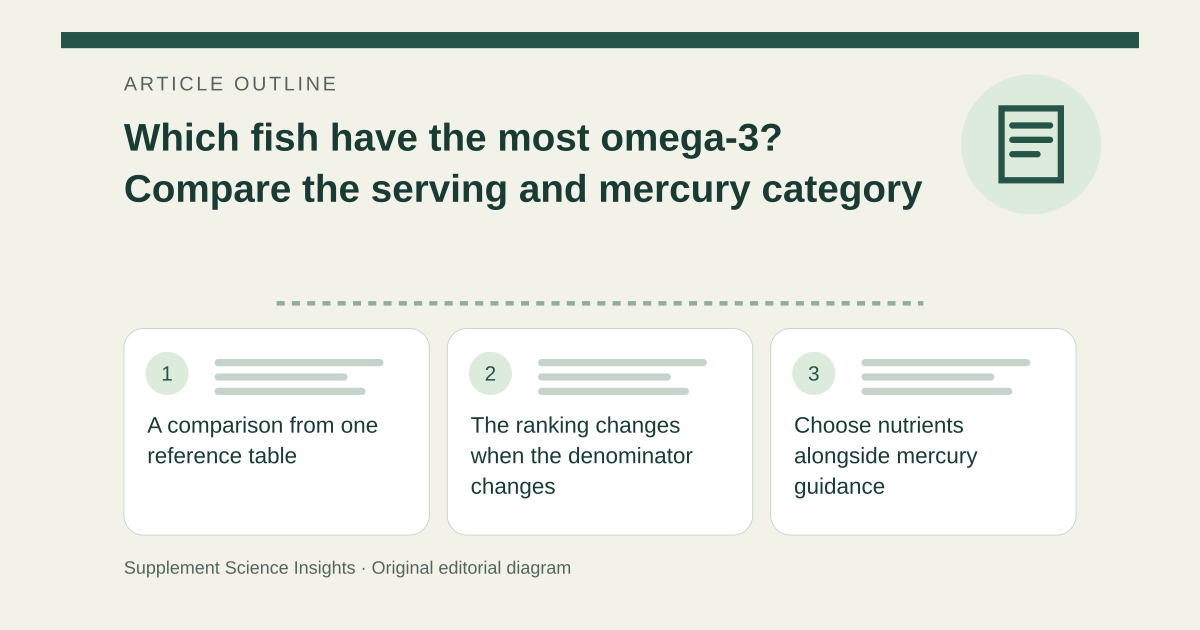
A comparison from one reference table
For selected 3-ounce servings, NIH lists EPA plus DHA totaling 1.83 g for cooked farmed Atlantic salmon, 1.71 g for cooked Atlantic herring, 1.57 g for cooked wild Atlantic salmon, 1.19 g for drained sardines canned in tomato sauce, 1.02 g for cooked Atlantic mackerel and 0.84 g for cooked wild rainbow trout. These sums compare the listed preparations, not every fish ever tested. [1]
The ranking changes when the denominator changes
A larger portion can supply more even if its concentration is lower. Raw versus cooked weight, drained versus undrained cans, species and feeding conditions also affect values. Keep those details attached to a number instead of declaring that all salmon or all mackerel has one fixed amount. [1][2]
Choose nutrients alongside mercury guidance
Fish supplies protein and other nutrients as well as fats. FDA/EPA lists salmon, herring, sardines, Atlantic mackerel and freshwater trout among Best Choices for mercury. King mackerel is a different species in the highest-mercury avoidance category. A short market name should not erase that distinction. [3]
Match the serving advice to the person
For pregnancy and breastfeeding, FDA/EPA advises two to three 4-ounce servings weekly from Best Choices, or one serving from Good Choices. Children have smaller age-based servings. These advice portions differ from the 3-ounce nutrient table above. Locally caught fish also require checking local advisories. [3]
A nutritious choice does not require the single highest number
Imagine choosing between salmon and freshwater trout from reliable sources. Both can contribute protein and omega-3s within low-mercury advice. Recipe, cost, availability and dietary needs may reasonably decide the choice after the species and portion are established. [1][3]
| Comparison | Keep constant or identify |
|---|---|
| EPA plus DHA | Same edible portion and preparation |
| Mackerel | Atlantic versus king species |
| Meal suitability | Protein, mercury advice and preparation |
Sources for this article
- Omega-3 Fatty Acids - Health Professional Fact Sheet
Source consulted: 2026-09-21. This is a reference resource, not a claim that we conducted the studies or tested a product. - How to Understand and Use the Nutrition Facts Label | FDA
Source consulted: 2026-09-21. This is a reference resource, not a claim that we conducted the studies or tested a product. - Advice about Eating Fish | FDA
Source consulted: 2026-09-21. This is a reference resource, not a claim that we conducted the studies or tested a product.