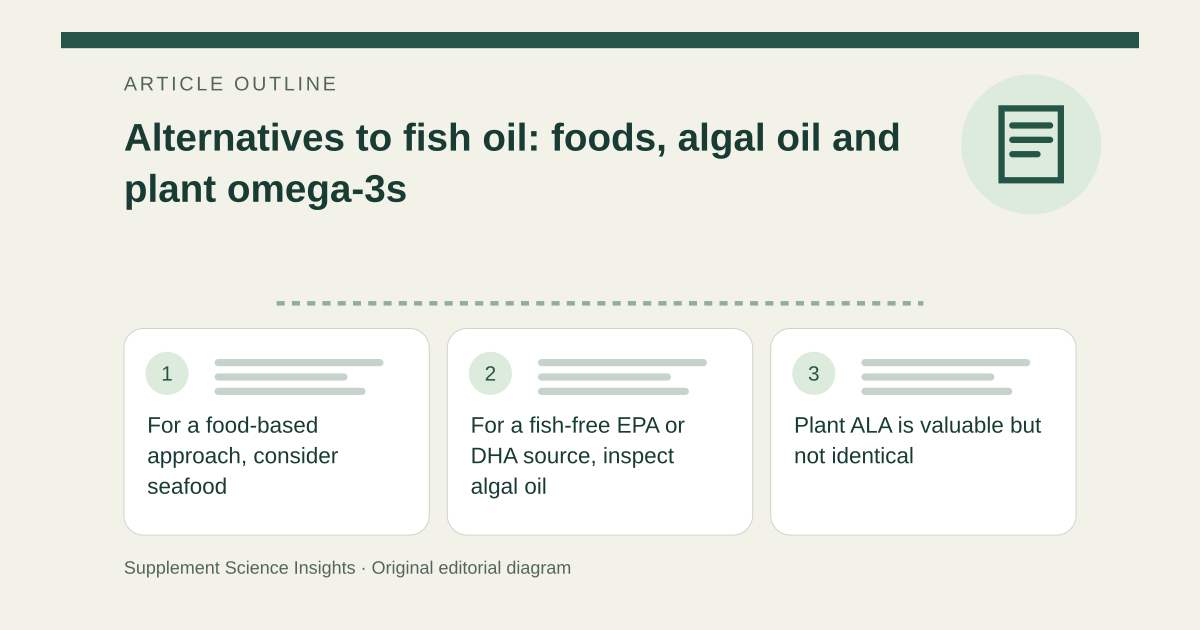
For a food-based approach, consider seafood
Salmon, sardines, herring and other fish supply EPA and DHA along with protein and additional nutrients. Choose species using appropriate mercury guidance. A food pattern may meet a dietary aim, but it is not automatically equivalent to a prescribed therapeutic omega-3 dose. [1][2]
For a fish-free EPA or DHA source, inspect algal oil
Algal-oil supplements commonly supply DHA, and some also contain EPA. Check the actual amounts and full formulation. The algae source does not guarantee a particular EPA/DHA ratio, clinical effect or certification; the label and relevant evidence still matter. [1][3]
Plant ALA is valuable but not identical
Flaxseed, chia, walnuts and certain plant oils provide ALA. The body can convert some ALA to longer-chain omega-3s, but conversion is limited. Do not assume a gram of ALA delivers a gram of EPA plus DHA or reproduces the evidence for a specific marine-oil medicine. [1]
Other marine oils are not automatically upgrades
Krill and cod liver oils have different compositions, and cod liver oil can add vitamins A and D. A change in source or absorption claim does not establish better clinical outcomes. If the aim is avoiding fish or other animal sources, verify the source and capsule ingredients rather than relying on the product category alone. [1][3]
Match the replacement to the original need
Imagine someone avoids fish and wants DHA: a clearly labeled algal product may address that preference. Someone seeking more ALA can use suitable plant foods. Someone prescribed treatment for high triglycerides should discuss a replacement with the prescriber rather than substitute a seed oil by volume. [1]
| Purpose | Relevant option |
|---|---|
| Food providing EPA and DHA | Appropriate seafood |
| Fish-free DHA or EPA | Verified algal formulation |
| Dietary ALA | Flax, chia, walnuts or suitable oils |
Sources for this article
- Omega-3 Fatty Acids - Health Professional Fact Sheet
Source consulted: 2026-09-21. This is a reference resource, not a claim that we conducted the studies or tested a product. - Advice about Eating Fish | FDA
Source consulted: 2026-09-21. This is a reference resource, not a claim that we conducted the studies or tested a product. - Dietary Supplements: What You Need to Know
Source consulted: 2026-09-21. This is a reference resource, not a claim that we conducted the studies or tested a product.