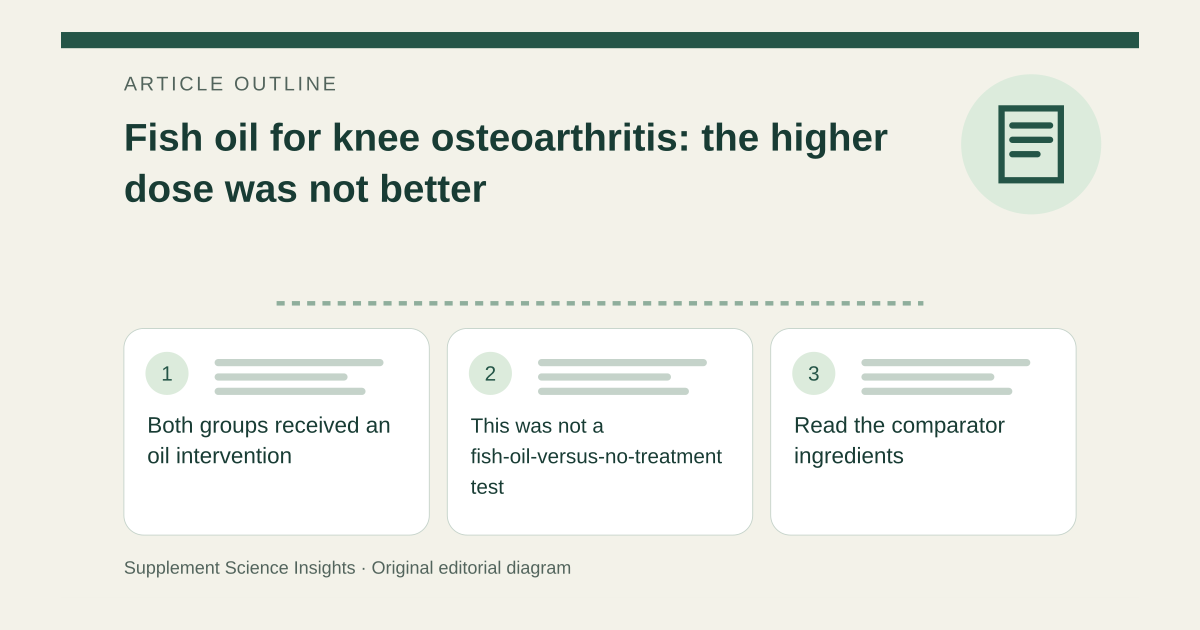
Both groups received an oil intervention
The double-blind trial randomized 202 people with knee osteoarthritis and regular knee pain to a higher-dose fish oil or a lower-dose fish-oil-and-sunola blend. The treatments differed in composition as well as omega-3 amount. [1]
At two years, pain and function improved more in the lower-dose blend group. The one-year differences were not statistically significant, and cartilage volume loss did not differ between groups at two years. [1]
This was not a fish-oil-versus-no-treatment test
Because the comparator also contained fish oil and another oil, the result cannot isolate the effect of low-dose fish oil itself or establish benefit over an inert placebo. [1]
Funding and conflicts were not established from the abstract. The study argues against assuming that more omega-3 produces greater knee benefit. It does not prove cartilage regrowth, identify a universal dose or replace assessment and management of persistent knee pain. [1]
Read the comparator ingredients
Imagine a lower-dose blend performs better than a higher-dose single oil. The difference could involve the blend, so it cannot be attributed to dose alone without further evidence.
| Detail | Interpretation |
|---|---|
| 202 participants | Knee osteoarthritis |
| Higher-dose strategy | No added benefit |
| Cartilage loss | No group difference |
Sources for this article
- Fish oil in knee osteoarthritis: a randomised clinical trial of low dose versus high dose - PubMed
Source consulted: 2026-09-19. This is a reference resource, not a claim that we conducted the studies or tested a product.