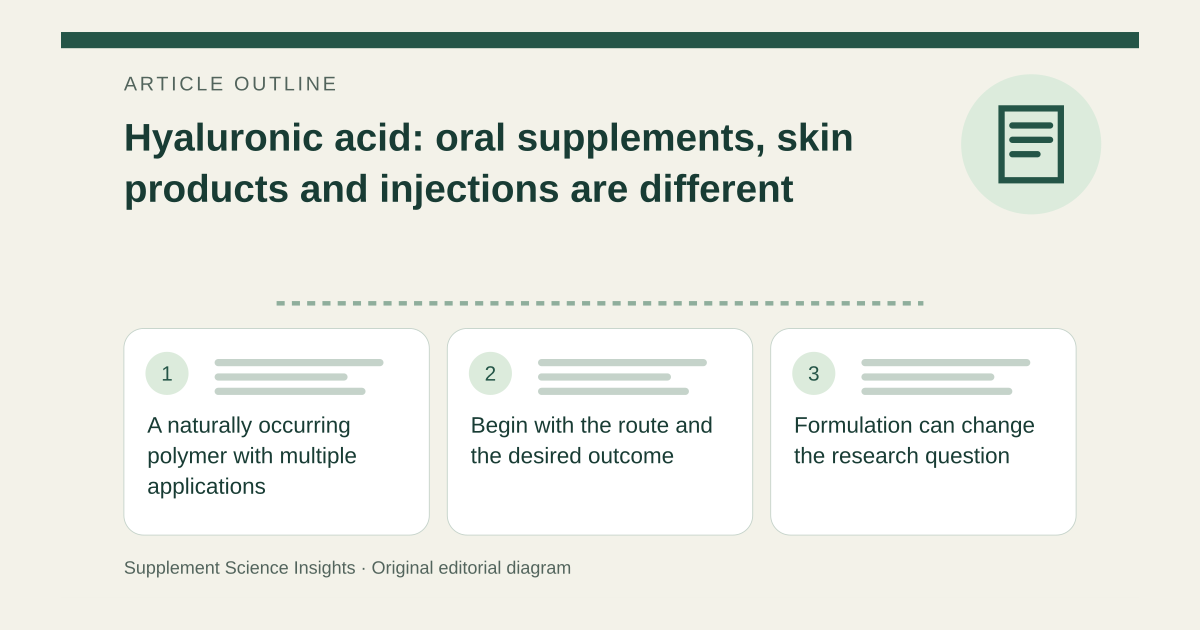
A naturally occurring polymer with multiple applications
Hyaluronic acid, also called hyaluronan, is a water-binding substance found in tissues including skin and joints. Products include oral supplements, topical preparations, eye products and injectable medical formulations. [1]
The same chemical name across those products does not establish the same exposure or result. A description of its natural function can explain interest in the ingredient without proving that swallowing a particular amount reproduces the effect of a topical or injected preparation. [1]
Begin with the route and the desired outcome
Cleveland Clinic describes several applications of hyaluronic acid, including skin hydration and medically administered treatments. Those applications should remain separate. A filler used to change local volume is not evidence that an oral capsule produces the same cosmetic effect. [1]
For an oral-supplement claim, ask for studies of the oral preparation and the specific outcome. Hydration measurements, wrinkle ratings, pain scores and mobility are different endpoints. A broad statement about skin or joints cannot substitute for that detail. [1]
Formulation can change the research question
Molecular characteristics, concentration and accompanying ingredients may differ between products. A label that lists hyaluronic acid does not by itself establish a match to a study's formulation. The amount of a total blend may also conceal the amount of the named ingredient.
For a practical comparison, record route, serving, actual ingredient quantity and the outcome being claimed. Do not rank an oral capsule against a serum using milligrams alone. Those measurements describe different delivery systems, and a conversion would require evidence that the labels do not provide.
Medical formulations require their intended setting
Safety depends on how a product is used and what else it contains. Cleveland Clinic emphasizes that injectable products require trained, qualified professionals; a retail topical or oral product is not suitable for injection. [1]
Combination products can carry risks from other ingredients. Discuss the complete preparation with the care team, especially when considering it for a medical condition. This page does not provide injection instructions or transfer a general ingredient safety statement to every formulation, population or route. [1]
Avoid comparing a percentage with a serving mass
Imagine a fictional serum lists a 1 percent concentration while an oral product lists 100 mg per capsule. Those numbers cannot be used to say that one delivers ten times the clinical benefit of the other.
The serum percentage describes concentration in a topical mixture. The capsule number describes an oral amount. Neither provides a direct estimate of what reaches a particular tissue or how an outcome changes.
| Fictional label | Quantity type |
|---|---|
| 1% serum | Topical concentration |
| 100 mg capsule | Oral serving amount |
| Direct benefit ratio | Cannot be calculated from these labels |
Use the right evidence for the right product
A useful hyaluronic-acid claim names its route and outcome. This reference does not recommend a supplement or equate it with an injectable treatment. Natural tissue function, topical performance and oral clinical benefit are separate propositions that require appropriate evidence.
Sources for this article
- Cleveland Clinic — Hyaluronic acid
Source consulted: 2026-09-17. This is a reference resource, not a claim that we conducted the studies or tested a product.