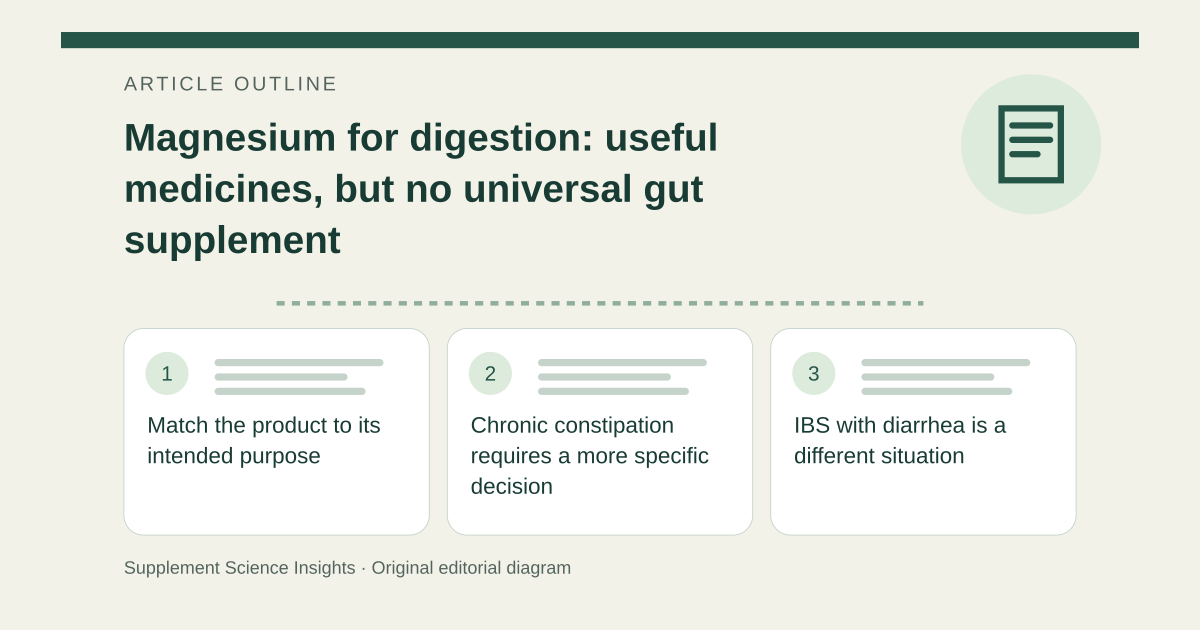
Match the product to its intended purpose
Magnesium oxide can be used as an antacid or laxative, while citrate medicines retain water with stool to relieve occasional constipation. Product instructions for those uses differ from nutritional supplementation. Best for digestion is therefore too broad a question without knowing the symptom and diagnosis. [1][2]
Chronic constipation requires a more specific decision
The AGA/ACG guideline conditionally suggests magnesium oxide for chronic idiopathic constipation with very low certainty of evidence. It advises avoiding it in renal insufficiency. That recommendation does not validate every magnesium formulation or indefinite self-treatment of unexplained bowel changes. [3]
IBS with diarrhea is a different situation
NIDDK distinguishes diarrhea-predominant and constipation-predominant IBS treatments. A magnesium laxative can worsen loose stools rather than treat IBS-D, and even nutritional magnesium may cause diarrhea. If replacement is medically needed, discuss a tolerable plan with the clinician instead of selecting a laxative by a gut-health claim. [4][5][2]
Magnesium can cause nausea; it is not a general anti-nausea remedy
Nausea is among the adverse effects associated with excess supplemental magnesium. Citrate instructions also advise review when stomach pain, nausea or vomiting is present before use. Persistent nausea needs attention to its cause rather than assuming another magnesium form will cure it. [5][2]
Count medicines along with supplements
Imagine someone uses a daily mineral capsule, an antacid and a bowel product without recognizing that all contain magnesium. Review every source, kidney function and other medicines. A familiar nutrient can still create excessive exposure when several products are combined. [5]
| Concern | Important distinction |
|---|---|
| Constipation | Laxative use versus nutritional need |
| IBS-D | Laxative effects can worsen diarrhea |
| Nausea | Possible adverse effect, not automatic indication |
Sources for this article
- Magnesium Oxide - MedlinePlus
Source consulted: 2026-09-21. This is a reference resource, not a claim that we conducted the studies or tested a product. - Magnesium Citrate: MedlinePlus Drug Information
Source consulted: 2026-09-21. This is a reference resource, not a claim that we conducted the studies or tested a product. - American Gastroenterological Association-American College of Gastroenterology Clinical Practice Guideline: Pharmacological Management of Chronic Idiopathic Constipation - PMC
Source consulted: 2026-09-21. This is a reference resource, not a claim that we conducted the studies or tested a product. - Treatment for Irritable Bowel Syndrome - NIDDK
Source consulted: 2026-09-21. This is a reference resource, not a claim that we conducted the studies or tested a product. - Magnesium - Health Professional Fact Sheet
Source consulted: 2026-09-21. This is a reference resource, not a claim that we conducted the studies or tested a product.