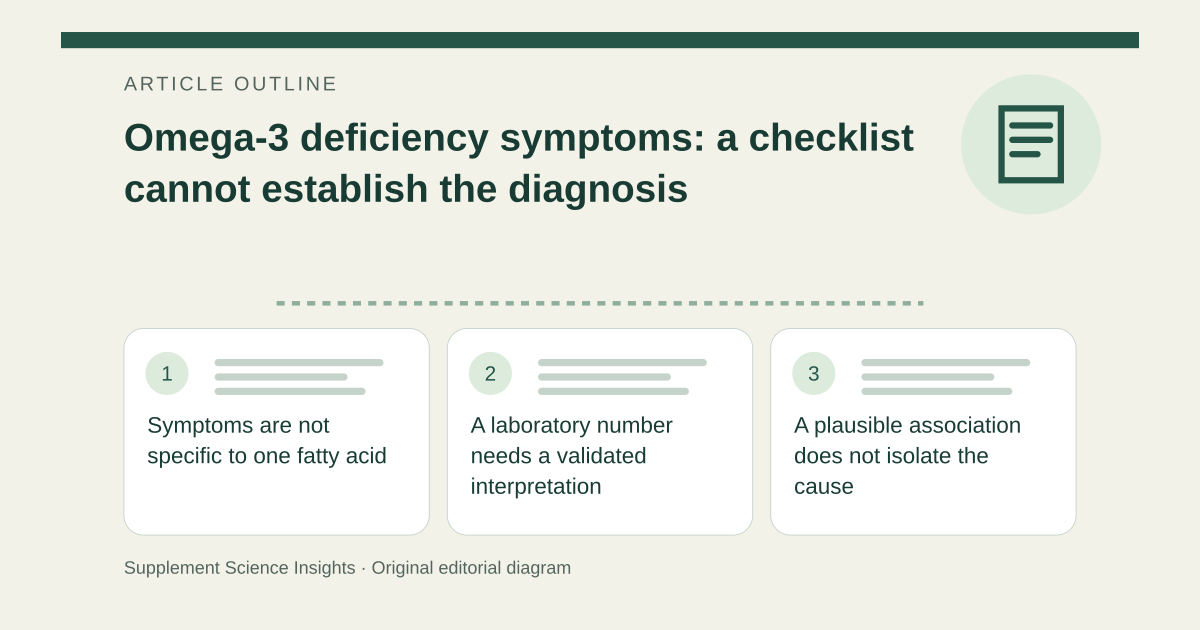
Symptoms are not specific to one fatty acid
ODS describes rough, scaly skin and dermatitis with essential-fatty-acid deficiency, which can involve omega-3 or omega-6 fats. These findings have many other possible explanations and are not a diagnostic checklist for buying fish oil. [1]
The summary discusses severe nutritional circumstances, including historical inadequate parenteral feeding. Those cases differ from ordinary variation in seafood consumption. [1]
A laboratory number needs a validated interpretation
ODS states that no established EPA or DHA concentration cutoff identifies the point below which specified visual, neurological or immune functions become impaired. A test can measure a fatty-acid status without automatically diagnosing a functional deficiency. [1]
An omega-3 index, dietary assessment and clinical diagnosis are therefore different pieces of information. Persistent symptoms or suspected malabsorption need evaluation rather than a universal supplement dose inferred from a result. [1]
A plausible association does not isolate the cause
Imagine someone with dry skin and little fish intake assumes omega-3 deficiency. That history may prompt a dietary discussion, but neither feature establishes the cause of the skin problem or the treatment it requires.
| Detail | Interpretation |
|---|---|
| Skin symptoms | Nonspecific |
| Fatty-acid measure | Not a diagnosis by itself |
| Classical deficiency | Different from a low-fish diet |
Sources for this article
- Omega-3 Fatty Acids - Health Professional Fact Sheet
Source consulted: 2026-09-17. This is a reference resource, not a claim that we conducted the studies or tested a product.