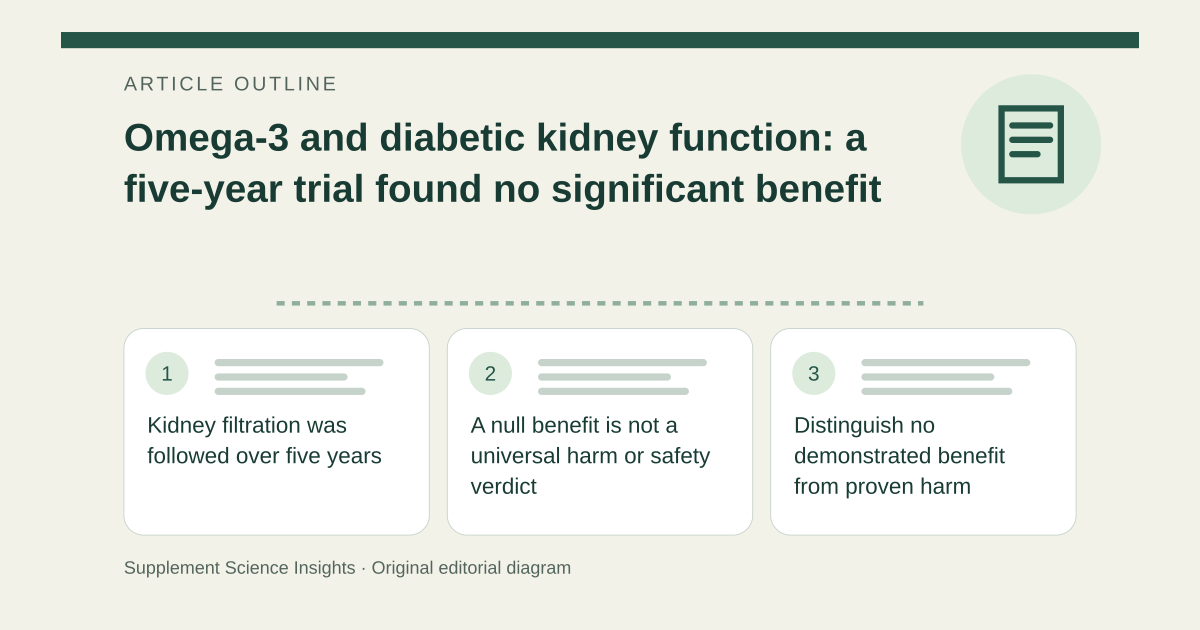
Kidney filtration was followed over five years
The factorial trial randomized 1,312 adults with type 2 diabetes to vitamin D, omega-3, both or corresponding placebos. The primary outcome was change in estimated glomerular filtration rate using creatinine and cystatin C. [1]
The omega-3-versus-placebo difference was about 0.9 mL/min/1.73 square meters, with a confidence interval spanning no difference. The result did not support using this supplementation strategy to preserve kidney function. [1]
A null benefit is not a universal harm or safety verdict
Only 71% completed the study. Gastrointestinal bleeding events were numerically more frequent in omega-3 recipients, but the abstract does not establish a statistically significant difference for that event. [1]
Investigators disclosed several outside commercial research and consulting relationships; trial funding was not fully assessed from the abstract. These results concern the tested regimen and diabetes population. They do not establish safety with every kidney disorder or replace individualized medication and nutrition review. [1]
Distinguish no demonstrated benefit from proven harm
Imagine a kidney-function comparison is not significant. The defensible conclusion is that this trial did not establish benefit, not that every use must damage kidneys.
| Detail | Interpretation |
|---|---|
| 1,312 randomized | Diabetes population |
| Five-year eGFR change | No significant benefit |
| Other kidney conditions | Not established |
Sources for this article
- Effect of Vitamin D and Omega-3 Fatty Acid Supplementation on Kidney Function in Patients With Type 2 Diabetes: A Randomized Clinical Trial - PubMed
Source consulted: 2026-09-19. This is a reference resource, not a claim that we conducted the studies or tested a product.