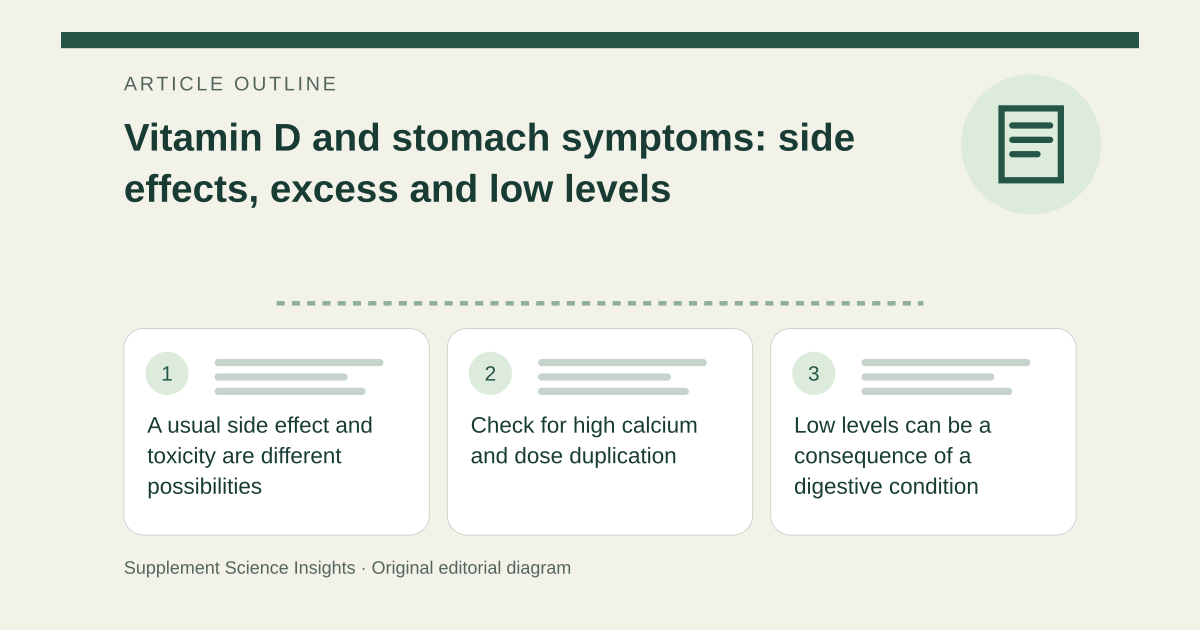
A usual side effect and toxicity are different possibilities
NHS lists stomach pain and nausea among colecalciferol side effects and advises review if they persist. For nausea, taking tablets with food may help when consistent with the product’s directions. Do not repeatedly increase the dose or assume discomfort means the product is working. [1]
Check for high calcium and dose duplication
Excess vitamin D can cause hypercalcemia. NHS identifies vomiting, confusion, bone or joint pain and irregular heartbeat as warning signs needing medical advice. Review all D-containing products and the prescribed schedule; an intermittent treatment dose must not accidentally become a daily one. [2][1][3]
Low levels can be a consequence of a digestive condition
ODS identifies fat-malabsorption conditions as risk factors for inadequate vitamin D status. Thus, finding a low level with bowel symptoms does not establish the direction of causation. The underlying gastrointestinal condition may need treatment alongside nutrient replacement. [2]
Constipation, diarrhea and bloating are not vitamin D tests
These symptoms can arise in many settings and should not be used to select a high dose. The cited guidance does not establish low vitamin D as the automatic explanation for gas, bloating, constipation or diarrhea. Persistent symptoms need assessment of their pattern and other contributors. [2][4]
Burning or reflux also needs its own review
Stomach discomfort after a product is not enough to diagnose reflux or identify the responsible ingredient. Record the formulation, timing and accompanying symptoms. Severe or sudden abdominal pain, vomiting blood, black sticky stools or collapse require urgent assessment rather than another supplement adjustment. [1][4]
Investigate both the nutrient result and the symptom
Imagine diarrhea leads to testing that finds low vitamin D. Treating the low level may be appropriate, but it does not establish that more D will resolve the diarrhea. Review the digestive cause and replacement response as related but separate questions. [2][4]
| Finding | Question to resolve |
|---|---|
| Nausea after D3 | Formulation, dose and tolerance? |
| Excess intake plus systemic symptoms | Possible high calcium? |
| Low D with bowel problems | Underlying malabsorption or another cause? |
Sources for this article
- Side effects of colecalciferol - NHS
Source consulted: 2026-09-21. This is a reference resource, not a claim that we conducted the studies or tested a product. - Vitamin D - Health Professional Fact Sheet
Source consulted: 2026-09-21. This is a reference resource, not a claim that we conducted the studies or tested a product. - Dietary Supplements: What You Need to Know
Source consulted: 2026-09-21. This is a reference resource, not a claim that we conducted the studies or tested a product. - Stomach ache - NHS
Source consulted: 2026-09-21. This is a reference resource, not a claim that we conducted the studies or tested a product.